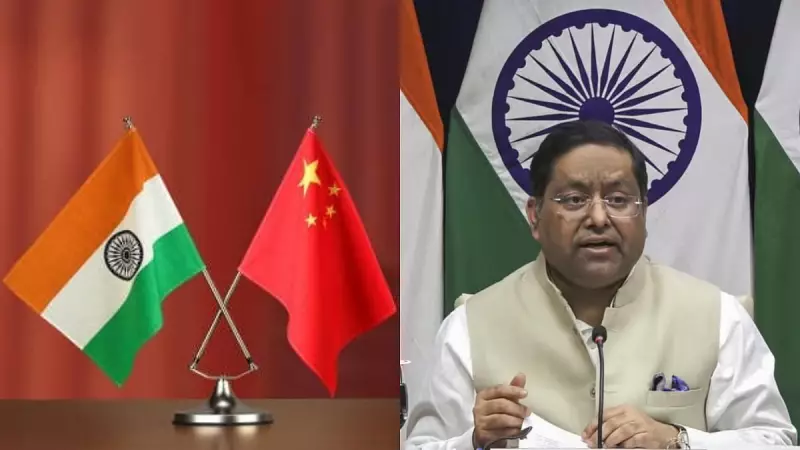
India has issued a strong diplomatic rebuttal to China's recent infrastructure development activities in the strategically significant Shaksgam Valley, firmly stating that such actions are based on an "illegal and invalid" agreement. The response came from the official spokesperson of the Ministry of External Affairs, Randhir Jaiswal, on Thursday, January 9, 2026.
India's Firm Stance on the 1963 Agreement
At the heart of India's rejection is its consistent position on the 1963 China-Pakistan Boundary Agreement. Spokesperson Jaiswal categorically stated that India has never accepted this pact. Under this agreement, Pakistan purported to cede approximately 5,180 square kilometers of Indian territory in the Shaksgam Valley to China.
New Delhi views this transaction as fundamentally flawed because it involves land that India claims as its own. The government's position is clear: Pakistan had no legal right to hand over any part of this territory, making the subsequent Chinese actions in the region equally illegitimate.

China's Infrastructure Push and Regional Implications
The Indian statement was a direct response to reports of China accelerating its infrastructure projects in the Shaksgam Valley. This area is part of the larger region of Pakistan-occupied Kashmir (PoK), which India asserts is an integral part of its sovereign territory.
Such developments are closely monitored by Indian security and diplomatic establishments due to their potential impact on the delicate security calculus in the region. The valley's proximity to the Siachen Glacier and the Line of Control (LoC) adds to its strategic sensitivity.
A Longstanding Dispute and India's Unwavering Position
This latest exchange underscores the persistent and complex boundary disputes India has with both its neighbors. The Shaksgam Valley issue is a tri-junction point of contention involving Indian, Chinese, and Pakistani claims.
By publicly reiterating its stance, India aims to:
- Formally register its protest and reject any changes to the status quo based on the 1963 pact.
- Reinforce its legal and historical claim over the entire territory of Jammu and Kashmir, including areas under foreign occupation.
- Signal to the international community that it does not recognize unilateral actions altering the geography of the region.
The statement from the External Affairs Ministry serves as a formal diplomatic record of India's objection. It leaves no ambiguity about New Delhi's view that the territory in question belongs to India and that any activities there by China or Pakistan are without legal basis. This firm posture is expected to be a continuing feature of India's foreign policy as it navigates these enduring territorial challenges.