

India Firmly Rejects 'Broker' Role in Iran Conflict, Contrasts Pakistan's Mediation Efforts
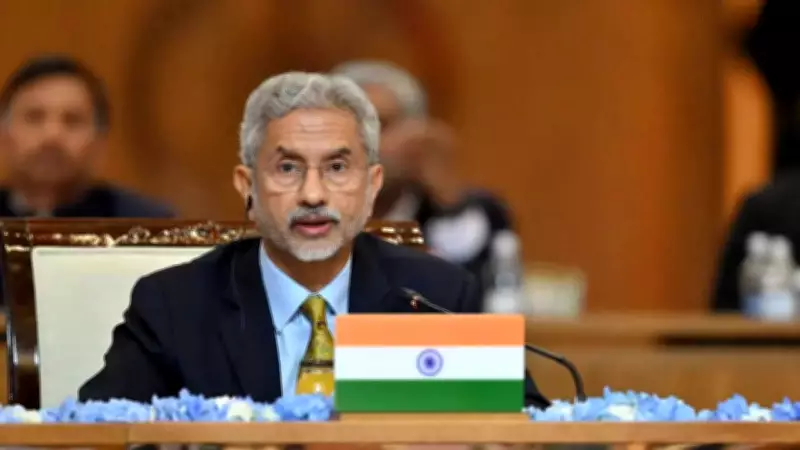
External Affairs Minister S Jaishankar has made a clear distinction between India's diplomatic stance and that of Pakistan regarding the escalating Iran conflict. During an all-party meeting convened at the Parliament complex to discuss the Middle East crisis, Jaishankar emphasized that India does not view itself as a "dalaal" (broker), a role he attributed to Pakistan amid growing reports of mediation efforts.
Jaishankar's Remarks on Pakistan's Historical Role
According to sources quoted by news agency PTI, Jaishankar pointed out that there is nothing new in Pakistan's attempts to mediate between Washington and Tehran. He highlighted that Pakistan has been "used" by the United States as an intermediary since 1981, suggesting a long-standing pattern of involvement. "We are not a dalaal nation," Jaishankar reportedly told attendees, reinforcing India's position of not engaging in such brokerage activities.
Context of Mediation Efforts in the Middle East
The minister's comments come as multiple countries, including Pakistan and Turkey, have stepped up efforts to act as intermediaries to de-escalate tensions in the Middle East. The ongoing conflict between Israel and Iran, along with broader regional instability, has prompted various nations to propose mediation roles. Key developments in the region include:

- Reports of Amazon Web Services experiencing disruptions following a drone attack in Bahrain.
- Saudi Arabia and the United Arab Emirates considering involvement in the Iran war.
- The deployment of the US 82nd Airborne Division to the Middle East, a rapid strike force with historical significance.
- Iran turning back a Pakistan-bound ship attempting to pass through the Strait of Hormuz due to "lack of permission."
India's Diplomatic Stance and Global Implications
By distancing itself from the "dalaal" label, India is asserting a more principled approach to international diplomacy, focusing on direct engagement rather than intermediary roles. This stance reflects broader strategic considerations in India's foreign policy, particularly in relation to its neighbors and global powers like the US. The all-party meeting served as a platform to discuss these complex dynamics, with Jaishankar's remarks underscoring India's commitment to a distinct path in navigating the Middle East crisis.
As tensions continue to simmer, India's rejection of a brokerage role highlights the evolving geopolitical landscape, where traditional mediators like Pakistan face scrutiny. This development adds another layer to the multifaceted conflict, with implications for regional stability and international relations.






