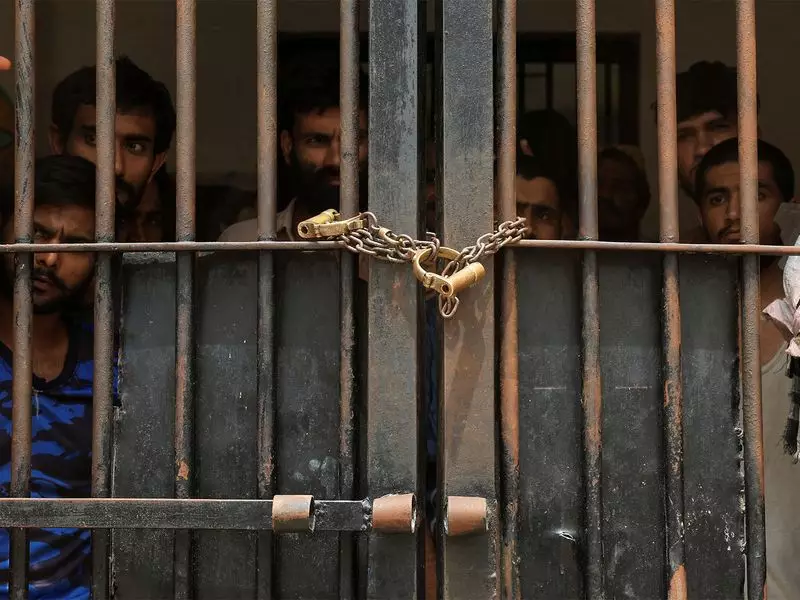
In a long-standing diplomatic ritual underscoring a persistent humanitarian issue, India and Pakistan on Monday exchanged, through diplomatic channels, the latest lists of civilian prisoners and fishermen currently detained in each other's jails. The exchange, mandated by the 2008 Agreement on Consular Access, revealed a troubling backlog, with 167 Indian fishermen and 57 civilian prisoners in Pakistan having completed their sentences but still awaiting repatriation.
The Annual Exchange and Its Findings
The lists were swapped by the respective High Commissions in New Delhi and Islamabad. According to India's Ministry of External Affairs (MEA), Pakistan shared a list containing 43 civilian prisoners and 211 fishermen who are Indian or believed to be Indian. In its reciprocal communication, India provided Pakistan with a list of 98 civilian prisoners and 224 fishermen in India who are Pakistani or believed to be Pakistani.
This annual exercise, conducted on January 1 and July 1 each year, is a key confidence-building measure. However, the data points to a significant implementation gap. The MEA stated that it has also urged Pakistan to expedite the release and repatriation of the aforementioned 167 Indian fishermen and 57 civilian prisoners who have already served their terms. Furthermore, India has requested consular access to the remaining 74 believed-to-be-Indian fishermen and 22 civilian prisoners for verification and to facilitate their early release.

A Stubborn Humanitarian Challenge
The issue of fishermen and civilian prisoners remains one of the most poignant and protracted humanitarian concerns in the fraught bilateral relationship. Fishermen are frequently arrested for allegedly straying across the poorly demarcated maritime boundary in the Arabian Sea. Their boats, often their sole livelihood, are confiscated, leading to immense hardship for their families.
Despite completing their often-minor sentences, prisoners face prolonged delays in returning home due to complex bureaucratic and verification processes on both sides. The exchange of lists is a formal step, but the real challenge lies in the follow-through—verification of nationality, confirmation of completed sentences, and the logistical arrangements for repatriation.
Diplomatic Appeals and Future Steps
India's official statement emphasized its commitment to addressing this issue. The government has called for the early release and repatriation of all eligible prisoners. It also reiterated its request for immediate consular access to the remaining Indian nationals, which is a fundamental right under international conventions and the bilateral agreement.
This consistent diplomatic push highlights India's stance that the matter should be dealt with purely on humanitarian grounds, irrespective of the state of political relations. The focus remains on ensuring the welfare and dignified return of its citizens. The ball is now in Pakistan's court to act on these requests and facilitate the swift return of those who have already paid their debt to society.
The recurring nature of this exchange, with its familiar numbers and repeated appeals, underscores the need for a more efficient, permanent mechanism. Until such a system is in place, hundreds of individuals and their families will continue to endure unnecessary suffering, caught in the crosscurrents of a strained diplomatic relationship.