
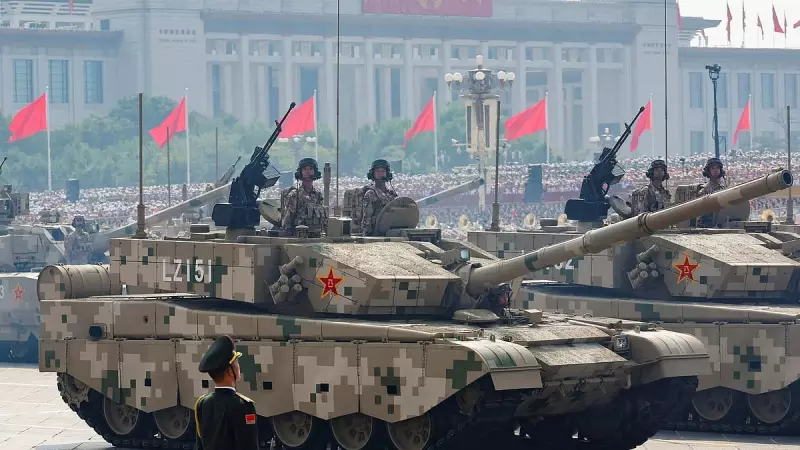
An insightful opinion piece urges India to develop its own strategic understanding of China's significant military modernization, moving beyond the framework often presented by the United States. The analysis suggests that Washington's portrayal of China as an urgent, overarching threat serves specific domestic purposes, which may not fully align with New Delhi's regional security calculus.
The Pentagon's Strategic Narrative
The article, authored by Ashu Maan and last updated on 08 January 2026, at 12:30 IST, posits a critical viewpoint. It argues that the United States frames China's military buildup primarily as a direct and pressing danger to American interests. This framing, according to the analysis, is instrumental in justifying the vast scale of US military readiness and securing substantial defense budgets from the US Congress. The narrative constructed in Washington, therefore, is inherently tied to its own geopolitical and fiscal objectives.
India's Need for an Independent Regional Assessment
The core argument pivots to India's position. For New Delhi, the implications of China's expanding military capabilities must be assessed through a different, more localized lens. The piece emphasizes that India's primary concerns are regional and continental, focusing on the immediate neighborhood and the complex shared border. A perspective solely borrowed from Washington risks obscuring the nuanced realities India faces on the ground, from the Line of Actual Control (LAC) to the Indian Ocean Region.
Blindly adopting the US-centric "urgent threat" paradigm could lead to strategic miscalculations for India. The nation's response, whether in terms of defense posture, diplomatic engagements, or economic policies, must be calibrated based on its own national interests and the specific dynamics of Sino-Indian relations, rather than being a derivative of another power's priorities.
Strategic Autonomy in Interpretation
The commentary underscores the principle of strategic autonomy in foreign policy analysis. While acknowledging the global significance of US-China tensions, it calls for India to "read China's buildup in regional terms." This involves a clear-eyed assessment of how Chinese power projection affects the subcontinent's balance of power, India's sovereignty, and its leadership role in Asia. It is a call for independent judgment, free from the gravitational pull of allied narratives, however powerful they may be.
In conclusion, the opinion serves as a timely reminder for Indian policymakers and strategic thinkers. As global powers craft their stories, India's security and future depend on its ability to author its own strategic narrative, one that is rooted in the realities of its region and its unique challenges with a rising China.