India Must Learn to 'Out-Tell' Adversaries in Information Domain, Say Experts
In Lucknow, senior strategic and diplomatic experts convened at a conclave hosted by the Army's Central Command, delivering a stark warning: future conflicts will be shaped as much by control of narrative as by battlefield outcomes. They stressed that India must learn to 'out-tell' its adversaries in the information domain to secure national interests.
Information Dominance as a Critical Pillar of National Security
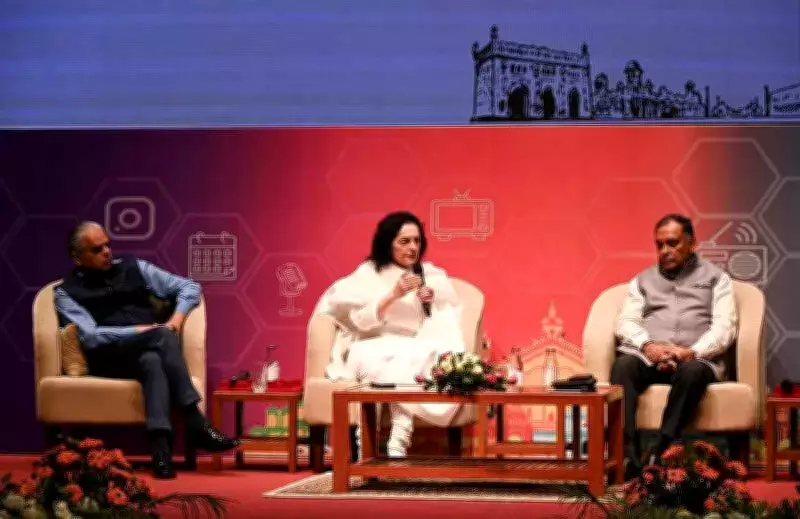
The event, themed 'Institutionalising strategic communication as a capability for future preparedness in the emerging information space', featured insights from former ambassador Yashvardhan Sinha, India's first woman permanent representative to the UN Ruchira Kamboj, and former Army commander Lt Gen (retd) Raj Shukla. All agreed that information dominance is now a critical pillar of national security, essential for countering disinformation and shaping global perceptions.
Personal Recollections and Lessons from Past Crises
Yashvardhan Sinha, a 1981-batch Indian Foreign Service officer with 37 years of experience, began with a personal anecdote from a television studio during a past crisis. As breaking news flashed that 'Karachi has been attacked', even seasoned officials were left uncertain about the facts. "The episode underscored how 24/7 news cycles and social media can distort events," he remarked. Referring to 'Operation Sindoor', Sinha noted that India eventually shaped global understanding by presenting satellite imagery and detailed evidence of damage to key Pakistani air bases. However, he acknowledged an early lag in narrative-building, which Pakistan exploited through disinformation, bots, and what he described as 'narrative laundering' via friendly networks. "Military success alone is not enough, there is a need to dominate the information space," he emphasized.

Institutional Readiness and Fact-Checking Improvements
Ruchira Kamboj, a 1987-batch IFS officer, focused on the necessity of institutional readiness over ad-hoc responses. She highlighted significant improvements in India's fact-checking ecosystem, citing instances where the MEA Fact Check handle, amplified by PIB Fact Check, quickly rebutted rumors about Somaliland recognition and allegations that the US had used Indian bases to strike Iran. "Rapid, transparent responses from trusted sources are central to building public confidence. Communication today often precedes and shapes policy," she stated. Kamboj pointed to India's 'pharmacy of the world' narrative during the Covid-19 pandemic, where vaccine deliveries, including images of an IAF aircraft landing in Bhutan, reinforced India's image as a reliable partner to the Global South. She distinguished strategic communication from spin or propaganda, insisting it must be factual, timely, and anchored in truth. Citing Finland's path to NATO membership, she noted how sustained, transparent messaging can gradually shift public opinion.
Leveraging the Information Domain and Structural Reforms
Lt Gen Raj Shukla, currently a member of the Union Public Service Commission, described strategic communication as the art of leveraging the information domain. He urged officers to understand the dynamics of television, print, podcasts, and social media, cautioning against limiting engagement to 'Delhi media' while overlooking influential regional platforms. Highlighting the power of framing, Shukla recounted a China-US exchange on the Indo-Pacific in which the phrase 'freedom of navigation' was reframed as 'coercion', altering perceptions among military leaders. For India, he proposed: "Strategic communication must rest on a trinity of ideation, narration and operations working in sync. This would require stronger think tanks, professional media talent and structural reforms, including moving beyond traditional media handling toward a joint directorate general for strategic communication aligned with the Chief of Defence Staff and integrated into national planning."
The conclave concluded with a consensus that mastering information warfare is not optional but imperative for India's future security and global standing.