India Hosts Unprecedented Naval Convergence in Visakhapatnam
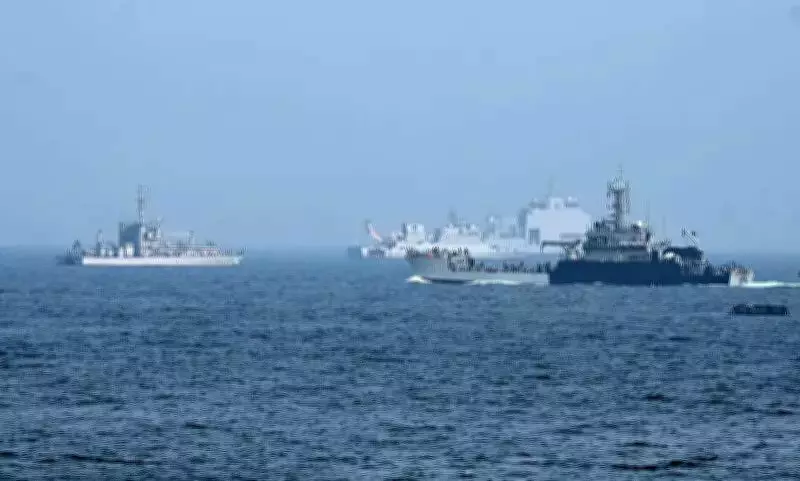
Visakhapatnam is currently the epicenter of global naval diplomacy, hosting a historic convergence of three major maritime events: the International Fleet Review (IFR), the multilateral naval Exercise MILAN 2026, and the IONS Conclave. Running from February 15 to 25, this unprecedented gathering features 71 warships and nearly 50 aircraft from nations including the USA, Russia, Japan, and Australia, with participation from around 70 countries in total.
Scale and Significance of the Events
This edition marks the first time IFR, MILAN, and IONS are being held simultaneously, making it the largest such event in history. Aircraft carriers, submarines, and frontline warships are converging on India's eastern seaboard, positioning Visakhapatnam as a hub for multilateral maritime engagement. The events unfold amid a complex maritime environment shaped by China's rapid naval expansion and Pakistan's deployments in the Arabian Sea.
India's ability to convene such a diverse array of navies underscores its growing strategic weight on the global stage. Notably, China, which participated in the previous IFR-2016 held in Vizag, has not been invited for IFR-2026. Turkey has also been excluded, following Chinese and Turkish support to Pakistan during Operation Sindoor.

Statements from Naval Leadership
Vice-Admiral Sanjay Bhalla, Flag Officer Commanding-in-Chief of the Eastern Naval Command, emphasized the significance of this convergence. He stated that hosting IFR, MILAN, and IONS in close succession represents a pivotal moment in India's maritime outreach and cooperative engagement with partner navies.
Exercise MILAN-2026, which commenced on February 15 and continues until February 25, forms a key pillar of this historic maritime convergence. As one of the largest multilateral naval exercises in the Indo-Pacific, MILAN 2026 aims to strengthen interoperability, maritime domain awareness, and collective response capabilities among navies from across the globe.
Operational Focus and Strategic Vision
The Harbour and Sea Phases of the exercise will focus on complex maritime operations, including anti-submarine warfare, air defence, search and rescue, and cooperative security missions. These activities reinforce a shared commitment to free, open, inclusive, and rules-based seas.
MILAN 2026 represents a major operational manifestation of Prime Minister's MAHASAGAR vision, reaffirming India's role as a Preferred Security Partner and a responsible stakeholder in the global maritime commons. For over two decades, India has utilized IFRs and opened its ports to allied navies to project maritime strength, foster international cooperation, and establish its role in blue water operations.
International Participation and Regional Outreach
Warships from the Philippines and the UAE are participating for the first time, highlighting the expanding scope of these events. The presence of Southeast Asian navies, including Indonesia, Malaysia, Thailand, Vietnam, and the Philippines, underscores the Indian Navy's Act East outreach. This reinforces India's maritime engagement with ASEAN partners along some of the world's busiest sea routes.
Historical Context and Future Implications
India has hosted the IFR twice before, in Mumbai in 2001 and in Vizag in 2016. IFR-2026 will begin in Vizag city with a Presidential banquet on the evening of February 17. Technology will feature prominently at the event, showcasing indigenous ships, aircraft carriers, and destroyers, reflecting India's transformation into a builder's navy.
The President of India will conduct the fleet review on February 18, followed by a colorful international city parade on the evening of February 19. These events help reduce operational friction and build confidence among participating navies. Fleet reviews have long served as ceremonial demonstrations of naval capability, and at any given time, approximately 50 foreign ships operate in the Indian Ocean, a critical global transit route.