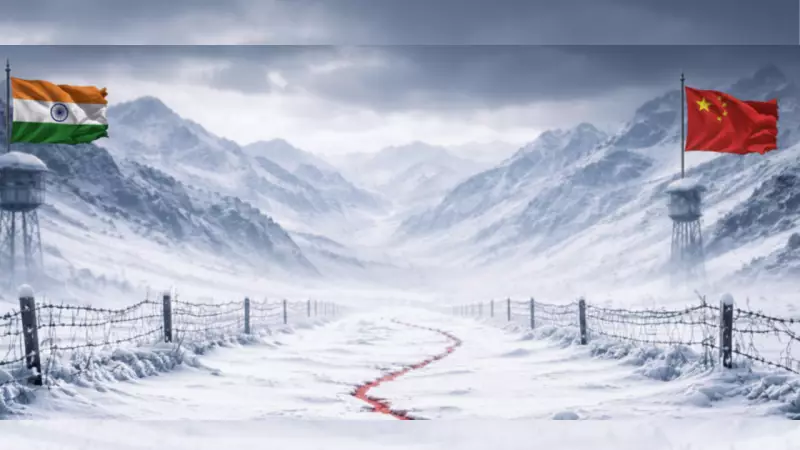
Five years after the deadly Galwan Valley clash, India has cautiously reopened diplomatic and economic channels with China, marking an unexpected shift in a relationship long frozen by mistrust and military standoffs. This 2025 thaw, however, is layered with historical irony and strategic caution, driven more by mutual necessity than by genuine reconciliation.
The Mechanics of a Managed Thaw
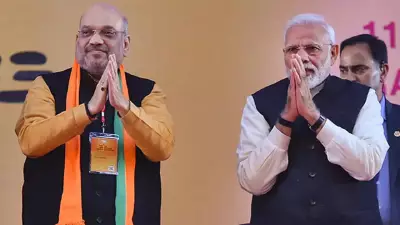
The visible signs of this recalibration are clear. High-level engagements have resumed, including Chinese Foreign Minister Wang Yi's visit to Delhi and a meeting between Prime Minister Narendra Modi and President Xi Jinping on the sidelines of the Shanghai Cooperation Organisation (SCO) summit. On the ground, talks on disengagement at critical friction points like Depsang and Demchok were revived.
Direct passenger flights between major cities like Delhi and Beijing restarted after a five-year hiatus, easing people-to-people contact. Border trade through Nathu La in Sikkim reopened, allowing local commerce. Diplomatically, both sides revived special envoys and working groups on boundary issues, creating mechanisms to manage friction without escalation.

Trade Surge Masks Deepening Imbalance
Commerce has seen a sharp, yet uneven, rebound. According to the Global Trade Research Initiative (GTRI), India's exports to China jumped 90% year-on-year in November 2025, reaching $2.2 billion. For the period from April to November, exports climbed 33% to $12.2 billion.
However, this growth is narrow and volatile, driven largely by products like naphtha and select electronics, while traditional sectors like iron ore and agriculture lag. Meanwhile, India's imports from China remain massive and structurally entrenched.
Between January and October 2025, electronics imports alone stood at $38 billion, followed by machinery ($25.9 billion), organic chemicals ($11.5 billion), and plastics ($6.3 billion). This includes critical components for mobile phones, integrated circuits, solar modules, and pharmaceuticals.
The result is a yawning trade deficit. While India's exports to China are projected to rise modestly to $17.5 billion in 2025, imports are estimated to surge to $123.5 billion. This pushes the trade deficit toward $106 billion, with Chinese data suggesting it may even exceed $115 billion.
A Reset Born of Strategic Compulsion
Analysts argue this detente is tactical, not transformative. As strategic expert Ashley Tellis noted, it is "driven by US tariff pressures and trade deficits, not genuine border resolution." For China, pressure from renewed US tariffs under President Donald Trump and a slowing economy made stabilising ties with India attractive. For New Delhi, prolonged military deployment along the Line of Actual Control (LAC) was a strain, and global supply chain disruptions highlighted the cost of sustained confrontation.
What emerged is a transactional, hedged arrangement designed to manage risk, not resolve rivalry. Former Indian Ambassador to China Gautam Bambawale underscored the limits, telling DW, "India is never going to permit Chinese firms like Huawei and ZTE into India's telecom space again."
Sustainability on a Knife's Edge
The durability of this calm is highly uncertain. Core issues remain unresolved:
- There is still no agreed demarcation of the LAC.
- Troop levels have not returned to pre-2020 positions.
- Political sensitivities around the Dalai Lama and China's partnership with Pakistan persist.
- Minor patrol incidents could quickly spiral into crisis.
Strategic analyst Brahma Chellaney cautions against overconfidence, warning that past experience shows how quickly tactical accommodation with China can unravel.
For India, the path ahead requires walking a tightrope. Military vigilance along the border cannot relax even as diplomacy continues. Economically, accelerating efforts to reduce critical import dependence in electronics, pharma, and clean energy is paramount. The 2025 thaw offers a space for managed stability, but it is a pause, not a peace. The challenge is to secure short-term gains without fostering long-term strategic illusions or vulnerability.