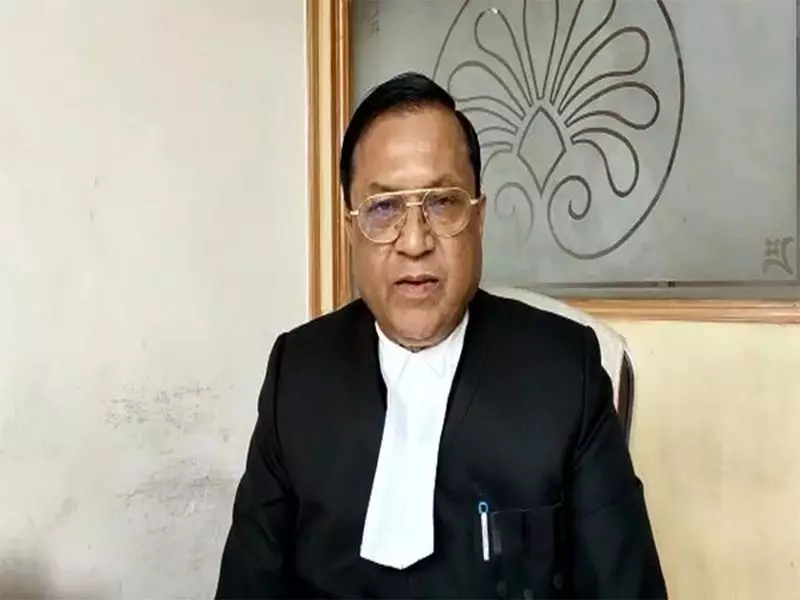
The President of the International Court of Justice (ICJ), Adish Aggarwala, has made a significant diplomatic appeal to three of the world's most influential leaders. He has urged former US President Donald Trump, Russian President Vladimir Putin, and Indian Prime Minister Narendra Modi to leverage their global stature to encourage a peaceful and bilateral settlement between Thailand and Cambodia.
The Core of the Long-Standing Dispute
The central issue revolves around the ancient Preah Vihear temple, a UNESCO World Heritage Site located on the contentious border between the two Southeast Asian nations. The dispute has deep historical roots, but a major flashpoint occurred in 2011. During that period, deadly armed clashes erupted between Thai and Cambodian forces near the temple, resulting in casualties and displacing thousands of civilians from their homes.
This escalation prompted Cambodia to take the matter to the International Court of Justice, seeking a reinterpretation of its 1962 judgment that awarded the temple to Cambodia. The ICJ, in a landmark ruling in 2013, clarified the territorial boundaries and ordered both countries to withdraw their military personnel from a provisional demilitarized zone around the temple complex.

Aggarwala's Direct Appeal to Global Powers
In his communication, President Aggarwala emphasized that the continued tension serves neither nation's interest and hinders regional stability in Southeast Asia. He argued that a lasting, peaceful resolution must come from direct dialogue and mutual agreement between Bangkok and Phnom Penh, rather than prolonged litigation or confrontation.
Adish Aggarwala specifically called upon Donald Trump, Vladimir Putin, and Narendra Modi due to their considerable diplomatic influence and their nations' strategic interests in the ASEAN region. He believes their collective or individual counsel could be instrumental in nudging Thailand and Cambodia back to the negotiating table. The appeal underscores a preference for diplomacy and bilateral talks over military posturing or unresolved legal ambiguity.
Implications for Regional Peace and International Law
This unusual appeal from the head of the world's top court highlights the persistent fragility of the situation. Despite the 2013 ICJ order, underlying tensions and sporadic incidents have kept the dispute alive. Aggarwala's move signals a proactive judicial diplomacy, where the guardian of international law seeks support from political power centers to enforce and solidify its judgments.
The call for intervention by leaders from the US, Russia, and India also points to the multi-polar nature of contemporary global diplomacy. A peaceful settlement brokered with support from these diverse powers could set a powerful precedent for conflict resolution in other parts of the world. It reinforces the principle that complex historical and territorial disputes are best solved through sustained dialogue and political will, supported by the framework of international law.
The world now watches to see if this direct plea from the ICJ President will resonate in Washington, Moscow, and New Delhi, and whether it will translate into concrete diplomatic action towards lasting peace between Thailand and Cambodia.