The year 2025 emerged as a landmark period for India's global trajectory, defined by assertive diplomacy, resilient economic management, and a reinforced stance on national security. Under Prime Minister Narendra Modi's leadership, the nation engaged with 23 countries across Africa, the Middle East, and Europe, translating outreach into concrete strategic and economic gains.
Diplomatic Triumphs and Strategic Partnerships
India's foreign policy in 2025 was marked by both consolidation and diversification. Relationships with key partners in the Global South, including the Maldives, were strengthened. Simultaneously, strategic partnerships saw significant advancement, particularly with the United Kingdom and the European Union.
A notable thaw in relations with China brought stability after the lows following the 2020 Galwan clash. Furthermore, meetings between PM Modi and Canadian PM Mark Carney during the G7 and G20 summits helped renew ties between the two democracies by year's end.

The personal touch in diplomacy was evident through rare gestures from world leaders. These included "car diplomacy" with Russian President Vladimir Putin and Jordan's Crown Prince Hussein, Ethiopian PM Abiy Ahmed personally escorting PM Modi, and the King of Bhutan receiving him directly on the tarmac.
Economic Resilience and "Nation First" Trade Policy
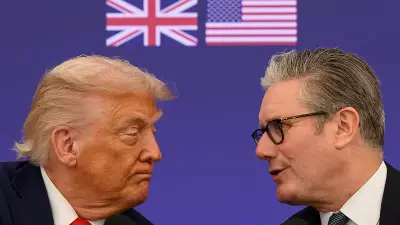
Amid global trade volatility, India's economy demonstrated remarkable strength. Prime Minister Modi's resolve was tested during President Donald Trump's tariff war, where his firm "Nation First" approach protected Indian farmers and small businesses, refusing inequitable trade deals.
This resilience was backed by solid numbers. Following a robust 8.2% real growth in Q2, GDP growth for FY 2025-26 is forecast at around 7.3%, keeping India among the world's fastest-growing major economies.
Key reforms provided renewed momentum, including landmark GST changes, the implementation of four labour codes, wide-ranging deregulation, and stimuli for industry and manufacturing. The focus remained on building a knowledge-based, self-reliant economy, with digital infrastructure, semiconductors, AI, and advanced manufacturing as core priorities.
Strategic trade negotiations bore significant fruit. The India-UK Comprehensive Economic Trade Agreement (CETA) and the India-Oman Comprehensive Economic Partnership Agreement (CEPA) expanded market access. A landmark Trade and Economic Partnership Agreement (TEPA) with EFTA nations marked India's first FTA with developed European economies, secured with a binding $100 billion investment commitment. An FTA with New Zealand was also finalised, while advanced talks with the EU, Canada, Israel, Mexico, and GCC countries boosted economic confidence.
Security Doctrine and Global Recognition
In response to the horrific Pahalgam terror attack in April 2025, India launched Operation Sindoor—a precisely calibrated and effective military response that destroyed terror infrastructure deep inside enemy territory. Establishing a new normal, PM Modi suspended the Indus Waters Treaty, declaring that "blood and water cannot flow together," reinforcing India's zero-tolerance doctrine on terrorism. This sovereign right to self-defence against cross-border terrorism garnered understanding from the international community.
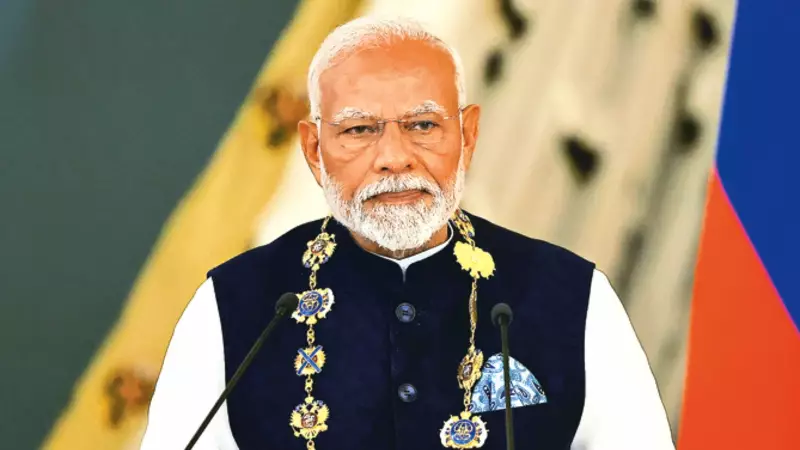
Global appreciation for India's leadership was reflected in the unprecedented 29 international honours bestowed upon PM Modi during the year. These included top civilian awards from nations such as Barbados, Mauritius, Sri Lanka, Cyprus, Ghana, Trinidad and Tobago, Brazil, Namibia, Ethiopia, and Oman, all of which he dedicated to India's 1.4 billion citizens.
In conclusion, 2025 proved to be a defining chapter in India's journey as a confident, rising nation, with Prime Minister Narendra Modi as its most visible embodiment on the world stage.