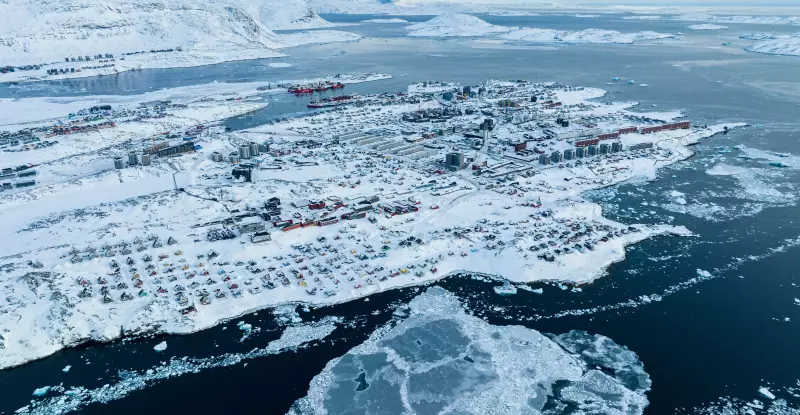
Greenland Emerges as a Geopolitical Powerhouse
Why does the United States show such keen interest in Greenland? At first glance, this question might seem puzzling. Greenland appears as a remote, frozen island with a small population. Yet, a deeper look reveals its immense strategic value in today's shifting world order.
The Arctic Thaw Awakens Power Politics
For centuries, the Arctic region remained largely ignored due to its harsh climate. Climate change now dramatically alters this reality. Receding ice opens up new possibilities that attract global powers.
The transformation creates access to previously untapped reserves. Valuable resources like oil, natural gas, and critical minerals become reachable. Simultaneously, new shipping routes emerge across the region.

The Northern Sea Route and potential transpolar passages promise to revolutionize global trade. These routes can significantly reduce travel time between Asia, Europe, and North America. Whoever controls these maritime corridors gains substantial economic and strategic leverage.
Greenland's Strategic Position Commands Attention
Greenland occupies a crucial location between the North Atlantic and the Arctic Ocean. This position makes it a gateway to some of the world's most important sea lanes. The island essentially controls access to emerging Arctic passages.
Beyond maritime advantages, Greenland offers critical military benefits. The Pituffik Space Base, formerly known as Thule Air Base, operates on Greenlandic territory. This facility serves as a key component of US missile early-warning and space surveillance systems.
With hypersonic weapons reducing response times, early detection becomes absolutely vital. Missiles traveling over the polar region reach North America faster than through any other trajectory. Many security experts believe Greenland provides the United States with crucial advantages in early warning and credible deterrence.
Resource Wealth Beneath the Ice
Greenland's ice sheets conceal tremendous mineral wealth. Significant deposits of rare earth elements, uranium, oil, and natural gas likely exist beneath the surface. These resources power everything from everyday smartphones to advanced fighter jets.
Global supply chains for critical minerals remain highly concentrated. China increasingly tightens its grip on these essential materials. Russia already controls substantial portions of the Arctic through icebreakers and military installations.
The United States views Greenland as a strategic hedge against dependency. Securing access to Greenland's resources would reduce American vulnerability in critical supply chains. This motivation drives much of the geopolitical interest.
The Logic of Strategic Denial
American interest extends beyond direct control. Washington does not necessarily need to "own" Greenland to benefit from its position. The United States can work to ensure that perceived adversaries do not dominate the island.
China declares itself a "Near-Arctic" state and shows deepening interest in Greenland. Chinese involvement in Greenlandic airports, infrastructure, and mining projects raises concerns in Washington. The United States aims to prevent strategic encirclement by blocking potential footholds before they solidify.
If expansion proves impossible, preventing strategic erosion becomes the next best option. This defensive logic shapes much of the current geopolitical maneuvering.
Symbolic Significance and Alliance Dynamics
The American interest carries important symbolic weight. Since World War II, the United States has attempted to position itself as an Arctic power without substantial Arctic territory. Greenland offers an opportunity to bridge this gap.
With Greenland, the United States would firmly anchor itself in the High North. This move could reinforce Washington's leadership within NATO. It might strengthen transatlantic security architecture during a period of significant stress.
The United States plans to support Greenland's development across economic, technological, and social dimensions. This approach aims to project an image of partnership rather than domination. Historical patterns, however, often interpret such philanthropic gestures as instruments of control.

Legal Realities and Ethical Considerations
Greenland is not empty territory waiting for claim. It represents neither terra nullius nor negotiable real estate. The island functions as a self-governing territory within the Kingdom of Denmark. Its status remains firmly established under international law.
The 1979 Home Rule Act and the 2009 Self-Government Act grant Greenland extensive autonomy. These laws provide control over internal affairs including natural resources, environment, fisheries, and taxation. Most importantly, they recognize the Greenlandic people as distinct with the right to self-determination.
Any change in Greenland's status requires the will of Greenlanders themselves. The people of Greenland are not chess pieces in geopolitical games. Denmark's sovereignty cannot be casually overlooked.
Attempts to "buy" or "occupy" Greenland revive memories of imperial arrogance. Such actions would prove difficult to justify in today's international community. Dismissing American interest as mere bravado, however, misses the profound geopolitical shifts underway.
The Central Question of Consent
Power politics never truly disappeared. It simply entered a period of hibernation. The Arctic thaw has awakened these dormant forces with renewed intensity. Sovereignty, self-government, and local consent form central issues for Greenland's future.
The crucial question is not why Washington pays attention to Greenland. The real issue involves how this attention will be managed. Any engagement must operate within established legal frameworks, respect existing alliances, and secure the consent of Greenlandic people.
Geopolitical competition intensifies as the Arctic transforms. Greenland stands at the center of this emerging strategic landscape. Balancing national interests with international law and local autonomy presents the fundamental challenge ahead.