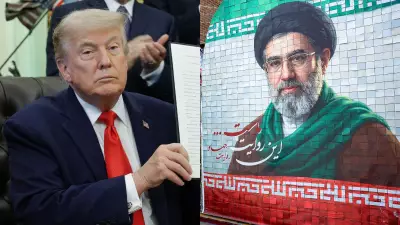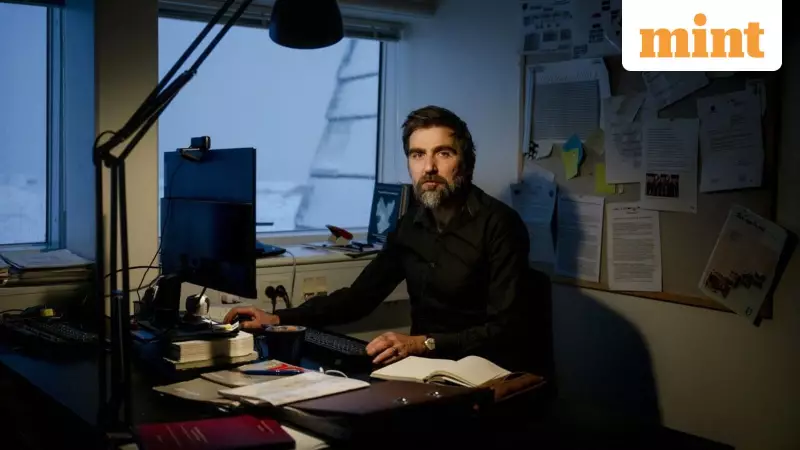
For over a year, Denmark's strategy to counter former US President Donald Trump's ambition to acquire Greenland was straightforward: declare it not for sale, boost Arctic defence spending, and wait for his interest to fade. However, in the Greenlandic capital of Nuuk, a stark realisation is dawning. Trump's fixation on the world's largest island is not melting away, forcing Greenlanders and their Danish overlords to craft a concrete plan for engagement with the United States.
A Renewed Threat and Forthcoming Talks
The spectre of an American takeover, once considered far-fetched, has grown significantly in Nuuk following Trump's return to power and his administration's renewed demands for control. This push intensified after the recent US military incursion in Venezuela. Notably, the White House has refused to rule out acquiring the island by force, escalating tensions.
In response to this pressure, Denmark requested a high-level meeting. US Secretary of State Marco Rubio confirmed he would meet with Danish and Greenlandic officials in Washington next week. Rubio, in a closed briefing to lawmakers, stated that recent threats did not signal an imminent invasion but reiterated the goal of purchasing Greenland from Denmark. "It seems that asking for a meeting with Rubio is a step up in this strategy," observed Ulrik Pram Gad, a senior researcher at the Danish Institute for International Studies.

Internal Divisions and the Independence Question
Within Greenland, the population is deeply divided on how to respond. A key question is whether Trump's overtures can be leveraged to advance the cause of independence from Denmark, a move a majority of Greenlanders support. Aki-Matilda Høegh-Dam, a pro-independence politician, noted, "I believe that most Greenlandic people see that they need to have that dialogue."
However, the blunt nature of Trump's approach has been widely condemned. Greenland's Prime Minister, Jens-Frederik Nielsen, recently labelled Trump's rhetoric "completely and utterly unacceptable." Paradoxically, Trump's threats have so far strengthened ties between Denmark and Greenland. Denmark, which subsidises Greenland with approximately $600 million annually, has increased its attention on the territory.
Public opinion remains largely against joining the US. In last year's elections, voters favoured Demokraatit, a centre-right party strongly opposed to an American takeover. Polls consistently show Greenlanders do not wish to become part of the United States. On Nuuk's streets, opinions are split. Fisherman Tommy Larsen argued for maintaining the status quo with Denmark, calling Trump's invasion threats "disrespectful." Conversely, Simon Josefsen, a 27-year-old crane operator, was open to US investment, stating, "Maybe the United States can help a little bit."
Strategic Stakes and International Backing
Trump's interest is rooted in national security and resource access. He insists the US must control Greenland to safeguard the Arctic from Russia and China and has emphasised the need for American access to the island's critical minerals. Denmark, a NATO ally, has countered that the US already has a military presence in Greenland and can collaborate to expand it. They have also rapidly increased military spending, including on the island's security infrastructure.
Greenland's strategic value is immense. It serves as a critical location for US missile warning and defence systems. Furthermore, its melting ice sheet is opening new commercial and military sea lanes, which Washington views as a potential threat.
Internationally, European leaders have rallied behind Denmark. They affirmed that Arctic security is a collective NATO task and that "it is for Denmark and Greenland and them only, to decide" on the island's future. French Foreign Minister Jean-Noël Barrot echoed this, stating, "Greenland is neither up for sale nor is it up for grabs." Criticism has also emerged from within the US, with Senator Mitch McConnell calling the administration's threats "as unseemly as they are counterproductive."

Experts point to a confusing duality in the US approach. Jeppe Strandsbjerg, an Arctic security expert at the University of Greenland, highlighted the mixed messaging: "When members of the administration address Greenlanders, they say, 'Oh, we love you, and we’re going to take care of you.' And then they speak to everybody else and say 'we need to control this and then take it over.'" As talks loom, Greenland finds itself at the centre of a geopolitical struggle, balancing its aspirations for self-determination against the hard realities of great-power politics.