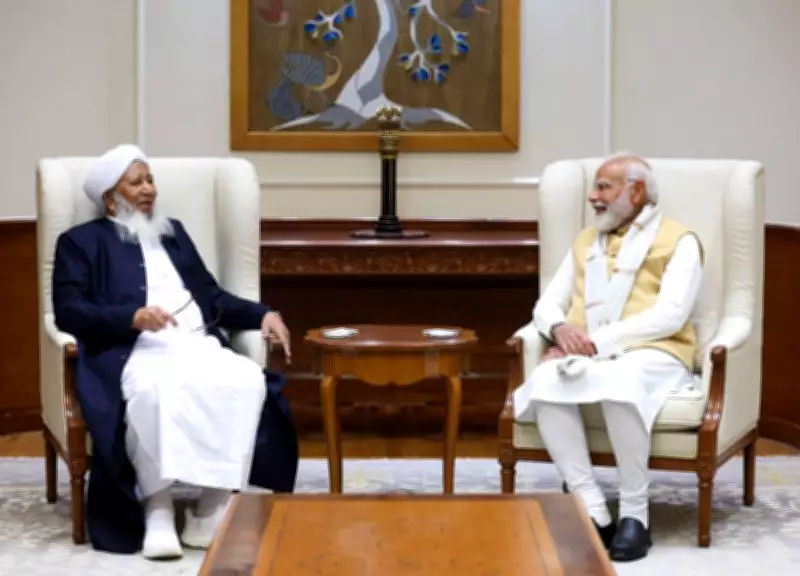
Grand Mufti Abubakr Ahmad, Who Played Key Role in Nimisha Priya's Execution Reprieve, Holds Meeting with Prime Minister Narendra Modi
In a significant development highlighting interfaith cooperation and humanitarian diplomacy, Grand Mufti Abubakr Ahmad, a prominent Islamic scholar from Kerala, met with Prime Minister Narendra Modi in New Delhi. The meeting, which took place recently, underscored the collaborative efforts that led to a crucial delay in the execution of Nimisha Priya, an Indian nurse sentenced to death in Yemen.
Background on Nimisha Priya's Case and the Grand Mufti's Intervention
Nimisha Priya, a nurse from Kerala, was convicted and sentenced to death in Yemen for the alleged murder of a Yemeni national in 2017. Her case garnered widespread attention in India, with appeals for clemency and diplomatic intervention to save her life. In a pivotal turn of events, Grand Mufti Abubakr Ahmad, leveraging his religious influence and connections in Yemen, played a instrumental role in persuading the victim's family to accept blood money, a practice under Islamic law that can halt executions.
This intervention resulted in a temporary stay of Nimisha Priya's execution, providing a window for further legal and diplomatic efforts. The Grand Mufti's actions were widely praised as a humanitarian gesture that transcended religious boundaries, emphasizing the power of dialogue and compassion in resolving such sensitive issues.

Details of the Meeting Between Grand Mufti Abubakr Ahmad and PM Modi
During the meeting with Prime Minister Modi, Grand Mufti Abubakr Ahmad discussed the ongoing efforts to secure Nimisha Priya's release and the broader context of interfaith harmony in India. The Prime Minister acknowledged the Grand Mufti's crucial role in the case, expressing appreciation for his humanitarian initiative and the positive impact it had on fostering unity and peace.
The discussions also touched upon themes of communal cooperation and the importance of religious leaders in promoting social welfare and justice. Both leaders emphasized the need for continued collaboration between the government and civil society to address such international humanitarian crises effectively.
Implications and Future Prospects
This meeting marks a notable moment in India's diplomatic and social landscape, showcasing how interfaith dialogue can contribute to resolving complex international issues. It highlights the potential for religious figures to act as bridges in humanitarian efforts, especially in cases involving Indian nationals abroad facing severe legal challenges.
Looking ahead, the engagement between Grand Mufti Abubakr Ahmad and Prime Minister Modi is expected to bolster ongoing negotiations for Nimisha Priya's case, with hopes for a permanent resolution. It also sets a precedent for future collaborations between the Indian government and religious communities in addressing similar crises, reinforcing India's commitment to protecting its citizens globally through multifaceted approaches.
In summary, the meeting underscores the synergy between diplomacy and humanitarianism, driven by figures like Grand Mufti Abubakr Ahmad, whose efforts have provided a lifeline in Nimisha Priya's dire situation.