Energy Security for 1.4 Billion Indians is Government's Supreme Priority: Piyush Goyal
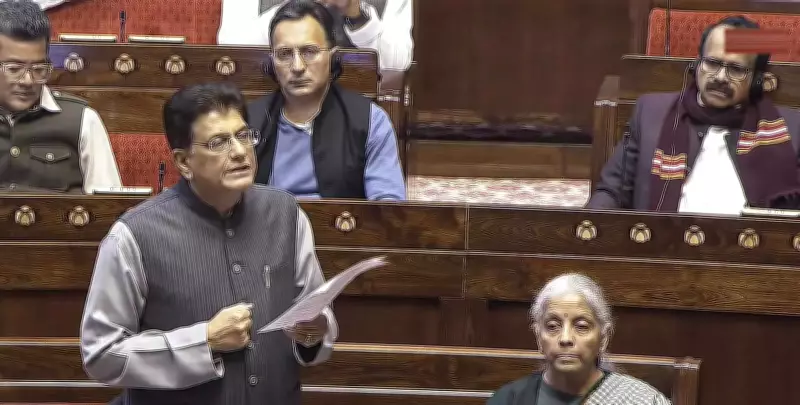
Commerce and Industry Minister Piyush Goyal declared in Parliament on Wednesday that ensuring the energy security of India's 1.4 billion citizens will remain the government's "supreme priority." He indicated that any adjustments in crude oil suppliers would not result in increased prices at fuel pumps, reassuring the public amid global market fluctuations.
Diversification and Strategic Adaptation in Oil Sourcing
Addressing the choice of oil suppliers, Minister Goyal explained, "Diversifying our energy sourcing in keeping with objective market conditions and evolving international dynamics is at the core of our strategy to ensure this. All of India's actions are taken with this in mind." This statement comes in the context of evolving global energy landscapes and previous claims by US President Donald Trump regarding India's oil purchases.
While Russia has historically been India's top oil source, its share of imports has decreased as discounts have diminished. In recent years, India has expanded its sourcing network, now importing oil from 41 countries, a significant increase from just 27 countries a few years ago. This diversification strategy aims to enhance energy security and mitigate risks associated with reliance on single suppliers.

US Trade Deal: Protecting Core Sensitivities and Unlocking Opportunities
Goyal highlighted that India successfully secured its "core sensitivities" in food and agriculture through the recent trade agreement with the United States. "Equally, this partnership will unlock new opportunities for MSMEs, skilled workers, and industry, enable access to advanced technology, and support Make in India for the world," he stated. This announcement followed reports that the United States Trade Representative acknowledged India's protection of its agricultural products.
The trade agreement also addresses punitive tariffs previously imposed by the US. Under the new bilateral deal, which has been under negotiation for nearly a year, the additional levy on Indian exports has been reduced from 50% to 18%. Goyal emphasized, "I wish to underline that this rate is lower than the tariffs imposed by the US on several competing countries, thereby enhancing India's export competitiveness in the US market."
Benefits for Indian Exporters and International Cooperation
The minister further noted that the agreement provides a significant comparative advantage to Indian exporters, particularly in labor-intensive sectors and manufacturing. With the United States being India's largest export destination, these tariff reductions are expected to boost India's export performance and economic growth.
In a related development, Russia affirmed that India is free to purchase oil from any source. A spokesperson from the Russian foreign ministry stated, "We remain convinced that India's purchase of Russian hydrocarbons is beneficial to both countries and contributes to maintaining stability in the international energy market. We are ready to continue close cooperation in this area with our partners in India." This underscores the ongoing diplomatic and economic ties between the two nations despite shifting global dynamics.
Overall, Minister Goyal's remarks in Parliament reflect a comprehensive strategy focused on energy security, economic diplomacy, and leveraging international partnerships to support India's domestic industries and global trade ambitions.