In a significant move underscoring the importance of regional partnerships, India's newly appointed Chief of Army Staff (COAS), General Upendra Dwivedi, chose Sri Lanka for his first official overseas visit. The high-level engagement, which took place on July 22, 2024, focused on strengthening the long-standing defence and security cooperation between the two neighbouring nations.
Guard of Honour and High-Level Talks
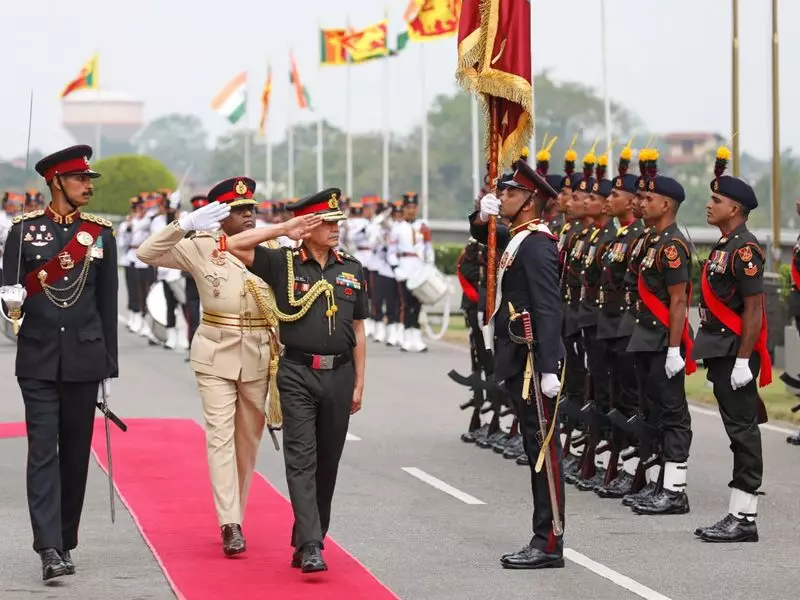
Upon his arrival in Colombo, General Dwivedi was accorded a ceremonial Guard of Honour at the Sri Lanka Army Headquarters. This traditional military courtesy marked the formal commencement of his visit. Following the ceremony, the Indian Army Chief engaged in crucial discussions with his Sri Lankan counterpart, Lieutenant General Vikum Liyanage.
The talks between the two military leaders were described as comprehensive and fruitful. They centred on reviewing the existing defence cooperation framework and exploring new avenues to enhance collaboration. Key areas of discussion included:

- Further training and capacity-building initiatives for Sri Lankan defence personnel in Indian institutions.
- Enhancing interoperability through joint exercises and exchanges.
- Sharing expertise in areas of mutual interest such as counter-terrorism, disaster management, and maritime security.
Deepening a Strategic Partnership
This visit is seen as a continuation of India's 'Neighbourhood First' policy and its commitment to being a reliable security partner for Sri Lanka. The defence relationship between India and Sri Lanka is multi-faceted, encompassing training, military exchanges, and high-level visits.
General Dwivedi's trip, occurring shortly after he assumed the role of India's 30th Army Chief on June 30, 2024, sends a strong signal about the priority New Delhi places on its ties with Colombo. It follows a consistent pattern of engagement, where visits by service chiefs from both countries have become a regular feature, fostering trust and understanding at the highest military levels.
The timing of the visit is also notable, as it reinforces stability in bilateral relations during a period of political transition in Sri Lanka and reaffirms India's role as a key partner in the island nation's security calculus.
Implications and Future Trajectory
The discussions between General Upendra Dwivedi and Lieutenant General Vikum Liyanage are expected to pave the way for more structured and advanced defence cooperation. The focus on practical collaboration, beyond symbolic gestures, points towards a relationship that is maturing and addressing contemporary security challenges.
For India, a stable and secure Sri Lanka is vital for its own strategic interests in the Indian Ocean Region. Strengthening the Sri Lankan military's capabilities through training and support contributes directly to regional stability. The visit also acts as a diplomatic counterbalance to other external influences in the region, underscoring India's position as the primary security provider in its immediate neighbourhood.
In conclusion, General Dwivedi's inaugural foreign visit to Sri Lanka has successfully reinforced a critical bilateral bond. It has provided fresh momentum to defence ties, ensuring that the military-to-military relationship remains a robust pillar of the broader India-Sri Lanka partnership. The outcomes of this engagement will likely be reflected in increased joint activities and deeper strategic convergence in the coming months.