

Former Trump Aide Resigns, Makes Explosive Claims on Iran Nuclear Program
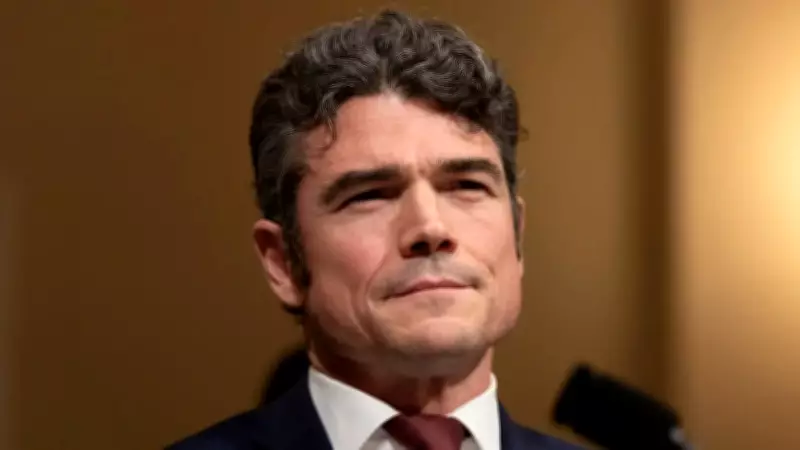
Joe Kent, who recently stepped down as director of the US National Counterterrorism Center, has made strong assertions regarding Iran's nuclear capabilities, stating that Tehran was not close to becoming a nuclear power. His resignation came amid the ongoing conflict with Iran, a central element of former President Donald Trump's aggressive strategy toward the Islamic Republic.
Kent Dismisses Reports of Major Iran Attack Plans
In his first interview after leaving his post, Kent firmly dismissed intelligence reports suggesting Iran was planning a large-scale attack on the United States comparable to the 9/11 attacks or the Attack on Pearl Harbor. Speaking on the Tucker Carlson podcast, he stated, "There was no intelligence that said, hey, on whatever day it was, March 1st, the Iranians are going to launch this big sneak attack, they're going to do some kind of a 9/11, Pearl Harbor, etc. They're going to attack one of our bases. There was none of that intelligence."
These remarks directly contradict repeated statements from Trump and the White House, which cited an "imminent threat" from Iran as justification for launching military strikes. Kent's perspective challenges the official narrative that has shaped US policy in the region.

Claims Khamenei Moderated Nuclear Programme
Kent further argued that Iran's late Supreme Leader Ayatollah Ali Khamenei, who was killed last month in joint US-Israeli strikes, had been actively moderating the country's nuclear programme. "I'm no fan of the former supreme leader, you know, Ali Khamenei, however, he was moderating their nuclear program. He was preventing them from getting a nuclear weapon," he said, adding a warning: "If you take him out, if you kill him aggressively, people are going to rally around that regime."
When asked by Carlson whether Iran was on the verge of acquiring a nuclear weapon, Kent replied, "No, they weren't," and noted that Iran's strategy was "to not completely abandon the nuclear program." This assessment suggests a more nuanced view of Iran's nuclear ambitions than often portrayed in US political discourse.
Blames Israel for Drawing US into Conflict
Kent also claimed that Israel had effectively drawn the United States into the conflict and was exerting broad influence over American policy in the Middle East. He referenced remarks by Senator Marco Rubio, who earlier argued that Iran posed an imminent threat because the US believed Israel was preparing to strike and Iran would retaliate. Kent described this reasoning as flawed, saying there was no indication Iran would attack without provocation.
In the interview, Carlson asked, "So, the imminent threat that the secretary of state is describing is not from Iran. It's from Israel?" to which Kent responded, "Exactly. And I think this speaks to the broader issue: who is in charge of our policy in the Middle East." This accusation points to deeper tensions in US-Israel relations and questions about foreign influence on American decision-making.
Resignation and FBI Investigation Unfold
Kent, who has previously faced criticism for alleged associations with far-right figures, including white nationalists and a Nazi sympathizer, focused heavily on Israel in his resignation letter. Some Republicans have accused him of promoting antisemitic conspiracy theories, adding a controversial layer to his departure.
Meanwhile, the Federal Bureau of Investigation has opened an investigation into Kent over alleged unauthorized disclosures of classified information, according to a person familiar with the matter. The inquiry has been underway for months and continued after Kent announced his resignation on Tuesday in protest against the US war with Iran.
In his resignation letter posted on social media platform X, Kent wrote that he could not support "sending the next generation off to fight and die in a war that serves no benefit to the American people." He argued that Iran did not pose an imminent threat and accused Israel of misleading the administration into the conflict that began on February 28 with US and Israeli strikes.

Trump Rejects Kent's Assessment
US President Donald Trump, speaking in the Oval Office, rejected Kent's assessment, stating he had long disagreed with his views. Trump reiterated that Iran "was a threat" and added that it was "a good thing" Kent had stepped down. This public rebuke highlights the internal divisions within the administration over Iran policy and the broader strategic approach to the Middle East.
The unfolding situation raises critical questions about intelligence assessments, foreign policy influences, and the transparency of government actions in conflict zones. As the FBI probe continues and political fallout spreads, Kent's claims are likely to fuel further debate on America's role in the Iran-Israel tensions.





