Former Slovak PM Radicova: India Can Be Global Peace Mediator Amid Ukraine War
In a significant address at Parul University in Vadodara, former Slovak Prime Minister Iveta Radicova articulated a compelling vision for global peace, emphasizing India's emerging role as a potential mediator in international conflicts, particularly against the backdrop of the prolonged war in Ukraine.
Global Order Breakdown and the Reluctance for War
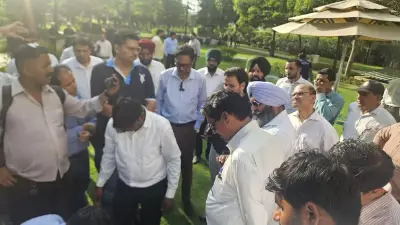
Radicova, participating in the university's Global Perspective Series on World Health Day, engaged with students on topics ranging from public policy to international relations. She painted a stark picture of the current geopolitical landscape, noting a visible breakdown of international order. "We are facing a real, physical war that reflects deeper unresolved issues," she stated, directly referencing the conflict in Ukraine as part of a larger, unsettling geopolitical shift.
Despite the prevalence of conflicts worldwide, Radicova offered a nuanced perspective on global sentiment. "Except maybe one or two leaders, nobody wishes for war. We know what it means — for humanity, economies and the future," she asserted, underscoring a widespread aversion to armed conflict despite its persistence.

India's Crucial Role as a Mediator
The former prime minister identified India as a key player capable of bridging divides in a polarized world. "India, with its population, economic growth, reforms and democratic trajectory, is well placed to emerge as a respected and professional mediator in new conflicts," Radicova explained. She highlighted that India's evolving global stature allows it to engage effectively across different political and economic blocs, positioning it uniquely to facilitate dialogue and peace efforts.
Radicova's remarks come at a time when international diplomacy is increasingly fragmented, and she sees India's democratic credentials and strategic neutrality as assets in mediating complex disputes like the Ukraine war.
Interconnected Crises and the Need for Cooperation
Drawing connections between various global challenges, Radicova emphasized that crises—whether in health, as highlighted on World Health Day, or in geopolitics—cannot be addressed in isolation. "If you are facing a global crisis, you cannot solve it alone," she told the students, advocating for robust international cooperation as the only viable path forward.
She also pointed out that many ongoing conflicts are driven by competition over resources, such as energy, and warned that military solutions alone are insufficient. "These issues require diplomatic and collaborative resolutions," she added, stressing the importance of multifaceted approaches to peacebuilding.
Lessons from History and the Path to Stable Peace
Reflecting on her experiences during the Velvet Revolution in Slovakia, Radicova offered a cautionary note about the illusions of peace. "Liberalization is not the same as liberty," she remarked, indicating that the end of the Cold War did not automatically usher in lasting global stability.
Outlining the prerequisites for "stable peace" in Ukraine, Radicova detailed a comprehensive framework that includes ensuring Ukraine's right to self-determination, rebuilding its institutions and infrastructure, holding parties accountable for actions, and guaranteeing long-term security measures. She acknowledged that such a process is arduous and could span many years, requiring sustained international commitment.
In conclusion, Radicova's address in Vadodara served as both a critique of current global disorder and a hopeful endorsement of India's potential to lead peace efforts. As conflicts like the war in Ukraine continue to disrupt international law, her call for mediation and cooperation resonates as a timely reminder of the collective responsibility to forge a more peaceful world order.