Former Mauritius President Applauds Kerala's Model of Coexistence
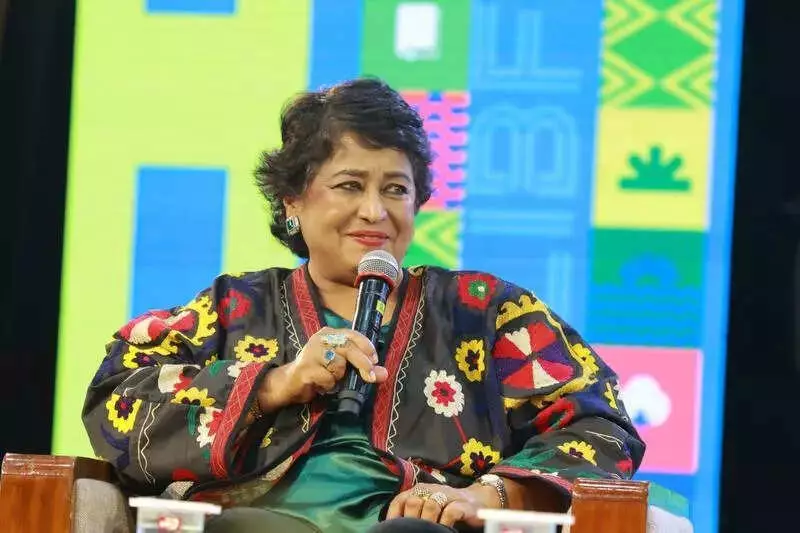
Thiruvananthapuram witnessed a powerful endorsement of Kerala's social fabric from an international leader. Former President of Mauritius Ameenah Gurib-Fakim delivered a compelling address at the Kerala Legislature International Book Festival on Tuesday. She emphasized the urgent need to showcase Kerala's remarkable example of peaceful coexistence to the global community.
A Living Example of Harmony
Gurib-Fakim shared a personal observation that deeply moved her. "When I opened the window of my room, I saw a temple, a church and a mosque, all within walking distance," she revealed. This tangible display of religious harmony left a strong impression on her. She firmly stated that this visible unity represents the crucial message the world needs to receive today.
Strengthening Cultural and Linguistic Bonds
The former president announced exciting prospects for cultural exchange. She confirmed that the Malayalam language might soon find a place in the curriculum of the Mahatma Gandhi Institute in Mauritius. This initiative responds to the presence of a small but significant Malayali community working on the island, with many employed in the nursing profession.

Reflecting on the broader Indian diaspora, Gurib-Fakim provided fascinating demographic insights. With ancestral roots tracing back to Ghazipur in Uttar Pradesh, she noted that approximately 70% of Mauritius's population originates from the Indian subcontinent. While uncertain about early Keralite migration, she identified Uttar Pradesh, Bihar, Maharashtra, Telangana, Andhra Pradesh, Tamil Nadu, and Gujarat as primary source regions. Several Indian languages from these states are already taught in Mauritian institutions.
Robust Economic Partnership and Shared Ideals
Gurib-Fakim highlighted the strong bilateral relationship between India and Mauritius. She pointed to flourishing trade and economic cooperation as pillars of this partnership. "The economy of Mauritius emerged on two pillars," she explained, "a protectorship protocol with special prices for sugar going to Europe, and the double taxation treaty with India." This treaty has been instrumental in fostering economic ties.
During the valedictory session, the former leader offered high praise for Kerala's developmental achievements. She specifically commended the state's success in eradicating extreme poverty. Gurib-Fakim interpreted this accomplishment as validation of a particular economic perspective. "The achievement validates the Marxist thesis that poverty is not a consequence of individual failure but a structural contradiction inherent to capitalistic economic relations," she stated.
She argued that Kerala's progress demonstrates a powerful global lesson. "The state's success tells the world that sustained political will, driven by clear ideology and combined with scientific decentralised planning, can rapidly resolve fundamental economic contradictions."
Drawing parallels with her own nation's journey, Gurib-Fakim noted how Mauritius implemented similar welfare policies post-independence. "This rhymes with the decisions taken after Independence in Mauritius, when the social safety net, healthcare and education became free for all," she added. She firmly believes that education stands as the greatest social enabler, a force that transformed both economies.
The former president's address wove together themes of cultural appreciation, linguistic promotion, economic partnership, and ideological affirmation. Her words presented Kerala not just as a Indian state, but as a potential blueprint for harmonious and equitable development.