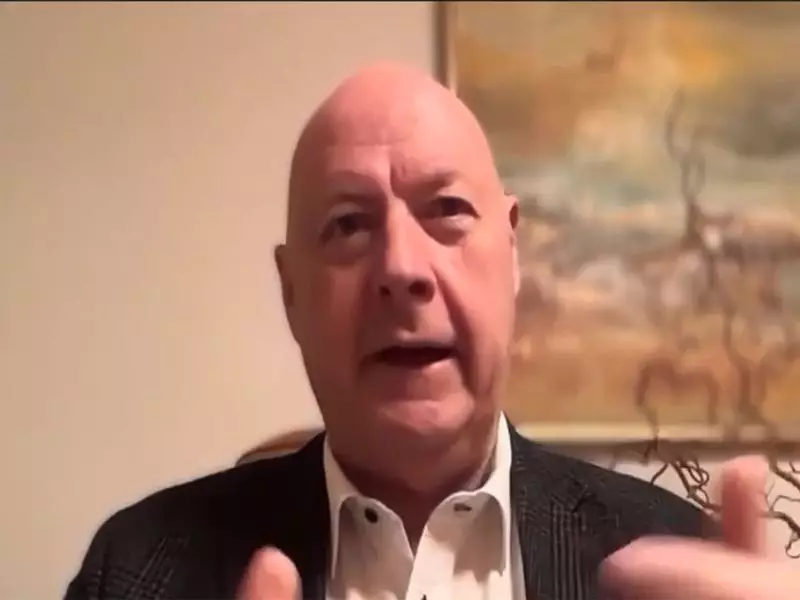
In a striking critique of former US President Donald Trump's foreign policy approach, Freddy Svane, Denmark's former ambassador to India, has labelled Trump's public remarks about purchasing Greenland as "unprecedented" and diplomatically reckless. Svane, who served in New Delhi from 2015 to 2020, emphasized that such statements severely strained relations between the United States and Denmark, underscoring a vital lesson in international diplomacy: dialogue, not public posturing, is the only way forward.
A Diplomatic Firestorm Over Greenland
The controversy erupted in 2019 when Donald Trump publicly floated the idea of the United States buying the autonomous Danish territory of Greenland. He later confirmed his interest was "strategically" motivated. The proposal was immediately and firmly rejected by the Danish government, which called the notion "absurd." In a retaliatory move, Trump abruptly postponed a scheduled state visit to Denmark, a serious diplomatic snub.
Freddy Svane, reflecting on the incident, highlighted the profound damage caused by this unconventional approach. He stated that Trump's method of conducting diplomacy through sudden public announcements was deeply harmful to the bilateral relationship. "It created a lot of bad blood," Svane remarked, pointing out that such actions disregarded decades of careful alliance-building and mutual respect between the two nations.

The Core Lesson: Dialogue Over Declaration
Drawing from this episode, Svane articulated a fundamental principle for effective international relations. He argued that complex geopolitical matters, especially those involving national sovereignty and strategic interests, cannot be resolved through off-the-cuff remarks or transactional proposals aired in the media. The former envoy stressed that "dialogue is the only way forward," advocating for quiet, persistent, and respectful conversations behind closed doors.
This approach, he believes, allows for nuanced understanding, builds trust, and creates space for compromise. The public nature of Trump's Greenland comments left no room for diplomatic maneuvering, forcing the Danish government into a corner where a public rebuke was the only possible response to defend its national integrity.
Implications for Global Diplomacy and India's Role
Svane's insights extend beyond the specific US-Denmark rift. They serve as a cautionary tale for global statecraft in an era where social media and public grandstanding can often overshadow traditional diplomatic channels. The incident demonstrates how fragile international partnerships can become when protocol and private consultation are abandoned.
Having served extensively in India, Svane's perspective is also informed by his experience in a region where diplomacy is often a delicate and multi-layered exercise. His advocacy for dialogue resonates strongly with India's own diplomatic philosophy, which frequently emphasizes sustained engagement and consensus-building on the world stage. The lessons from the Greenland affair reinforce the importance of the very diplomatic traditions that India often relies upon to navigate its complex relationships.
In conclusion, Freddy Svane's analysis of the Trump-Greenland episode is more than a recounting of a diplomatic spat. It is a powerful reminder that in an interconnected world, the art of diplomacy requires patience, discretion, and an unwavering commitment to conversation. As nations grapple with new challenges, the old-fashioned virtue of talking things through, away from the spotlight, remains the most reliable path to peaceful and productive international relations.