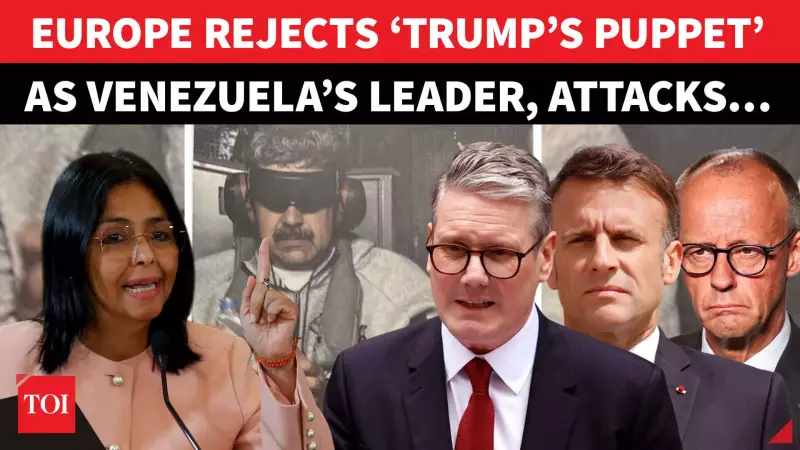
The political landscape in Caracas has undergone a significant shift, but the crucial question of international legitimacy for its new interim leadership remains fiercely contested. In a major development, the European Union has declared it does not recognise the authority of Venezuela's new interim government. The bloc argues that the process which brought this leadership to power failed to reflect the democratic will of the Venezuelan people.
Europe's Stance: No Recognition, But Open Channels
Despite its firm rejection of the interim government's legitimacy, Brussels is not severing all ties. The EU is adopting a strategy of targeted engagement, aiming to keep diplomatic channels open. This careful approach is designed to protect European interests in the volatile South American nation without offering any formal endorsement of the new authorities. The move underscores Europe's attempt to navigate a complex crisis where humanitarian and strategic concerns collide with principles of democratic governance.
Washington's Conditional Expectations
Across the Atlantic, the position from Washington appears more nuanced and conditional. Reports suggest that the future relationship between the United States and Venezuela's interim government will be heavily shaped by Caracas's compliance on specific fronts. Key issues of security and energy cooperation are likely to be primary determinants. This indicates a more transactional approach, where US recognition and support might be traded for concrete actions that align with American strategic and economic interests in the region.

Navigating a Post-Maduro Landscape
As Venezuela enters this new and uncertain phase following the departure of Nicolás Maduro, its interim leaders face a daunting triple challenge. They must simultaneously manage intense foreign pressure from major global powers, operate with severely limited international recognition, and withstand growing geopolitical scrutiny as world powers jockey for influence. The nation finds itself at the centre of a high-stakes diplomatic struggle, where its internal political future is inextricably linked to the competing agendas of the EU, the US, and other global players like China and Russia, who have also been deeply involved in the Venezuela crisis.
The declaration from Europe, dated January 7, 2026, firmly places democratic process at the heart of the legitimacy debate, setting a clear, principled barrier for the interim government in Caracas. How it responds to these international demands, while addressing dire domestic crises, will define Venezuela's path forward in the coming months.