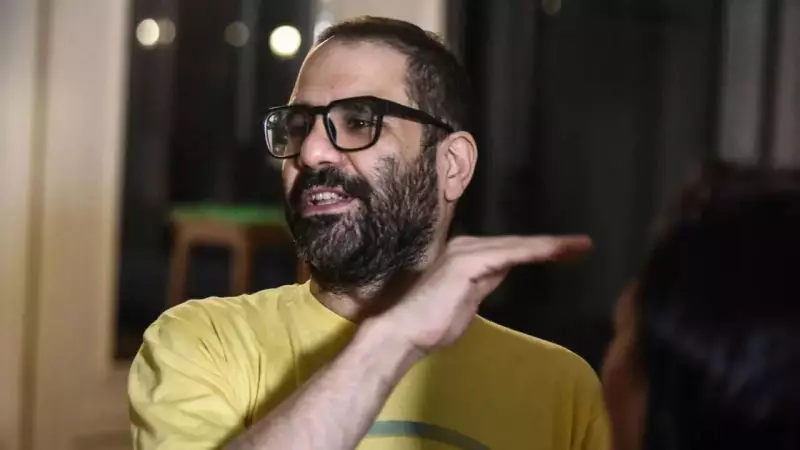
British-Egyptian pro-democracy campaigner Alaa Abd El-Fattah has finally arrived in the United Kingdom, marking the end of a long ordeal of imprisonment and travel restrictions in his native Egypt. The activist landed in Britain on 26 December after Egyptian authorities removed a ban that had prevented him from leaving the country for years.
From Prison to Pardon: A Decade-Long Struggle
Alaa Abd El-Fattah's journey to freedom has been arduous. A prominent voice during Egypt's 2011 revolution and the Arab Spring, the software developer and writer faced repeated arrests by Egyptian authorities since 2013. His activism, focused on political reform and civil liberties, often put him at odds with the state. He was most recently sentenced to five years in prison in 2021 on charges of spreading false news, a case widely condemned by international human rights groups as politically motivated.
His situation captured global attention, with a sustained campaign for his release gaining momentum after his mother, Laila Soueif, undertook a prolonged hunger strike. The breakthrough came in September 2025, when Egyptian President Abdel Fattah El-Sisi issued a presidential pardon for Abd El-Fattah. This was followed by the lifting of the long-standing travel ban, clearing his path to travel to the UK, where he holds citizenship through his mother.

Prime Minister's Welcome Ignites Political Firestorm
UK Prime Minister Keir Starmer publicly welcomed Abd El-Fattah's arrival, stating he was "delighted" the activist had been reunited with his family. However, this gesture quickly triggered a sharp political backlash. Shortly after Starmer's comments, historic social media posts attributed to Abd El-Fattah, dating from around 2010 to 2012, resurfaced online.
Critics, including opposition politicians, allege these old posts contain violent and antisemitic language. Figures like Nigel Farage and Conservative leader Kemi Badenoch have called for a review or even revocation of Abd El-Fattah's British citizenship in light of these revelations. Jewish organisations, including the Board of Deputies of British Jews, have expressed serious concerns and sought clarification from the government on whether the activist still holds the views expressed in the decade-old posts.
Questions Over Citizenship and "Good Character"
The controversy has also shone a light on the mechanism through which Alaa Abd El-Fattah acquired his British citizenship. He was granted citizenship in 2021 under a remedial scheme that addressed a historic gender injustice, allowing mothers to pass citizenship to children. This specific route, established following court rulings and aligned with the European Convention on Human Rights, did not require the standard "good character" test typically applied in naturalisation cases.
While supporters argue the scheme rightly corrected a discriminatory policy, critics contend it allowed citizenship to be granted without sufficient scrutiny of the individual's background. In response to the growing row, Downing Street has stated that Prime Minister Starmer and senior ministers were unaware of the historic social media posts at the time of the welcome and has described the content of those posts as unacceptable.
The case of Alaa Abd El-Fattah remains a complex intersection of human rights, international diplomacy, and domestic British politics, raising difficult questions about activism, historical speech, and the standards applied to citizenship.