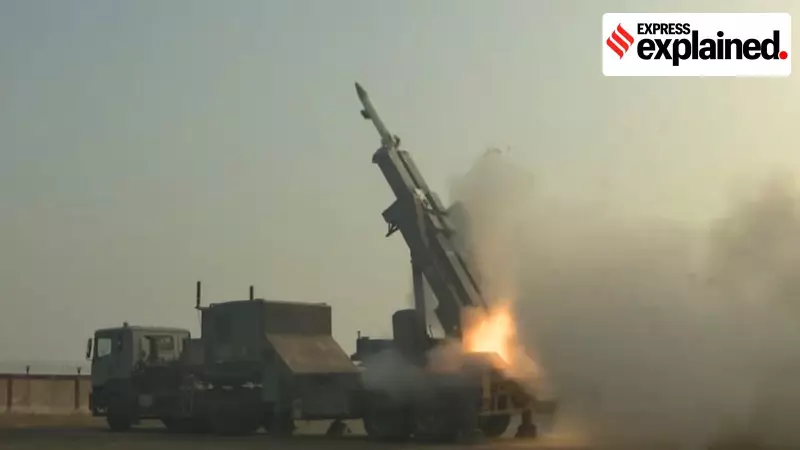
In a significant boost to India's indigenous defence capabilities, the Defence Research and Development Organisation (DRDO) has successfully concluded the crucial user evaluation trials (UET) for its next-generation Akash-NG surface-to-air missile system. The successful tests, conducted on Tuesday, December 23, 2025, clear the final major hurdle for the system's induction into the Indian Air Force (IAF).
From Sky Shield to Next-Gen Defender: The Akash Legacy
The journey of the Akash missile system began in the late 1980s under the visionary Integrated Guided Missile Development Programme led by the late Dr. APJ Abdul Kalam. Named after the Sanskrit word for 'sky', the original Akash was designed as a short to medium-range defender of critical assets. After extensive trials, it was inducted into the IAF in 2014 and the Indian Army in 2015, featuring 96% indigenous components and the ability to engage multiple targets simultaneously with built-in electronic counter-counter measures.
While the first version had an operational range of 27-30 km, development on its more advanced sibling, the Akash-NG (New Generation), began in the mid-2010s. This new system was conceived with a specific focus on countering modern aerial threats for the IAF.

What Makes Akash-NG a Game-Changer?
The Akash-NG is not merely an upgrade; it represents a technological leap. It is engineered to intercept highly manoeuvring threats with low radar signatures, such as stealthy drones and cruise missiles. Its enhanced capabilities include:
- Extended Range: A striking range of up to 70 kilometres, more than double that of its predecessor.
- Superior Deployability: A canisterised launcher and a significantly smaller ground system footprint allow for quicker deployment and mobility.
- Advanced Seeker: It is equipped with an indigenous Radio Frequency (RF) seeker for precise target tracking and terminal guidance.
- Enhanced Readiness: The sealed canisters protect the missile, simplifying logistics, extending shelf life, and ensuring rapid operational readiness.
Another variant, the Akash Prime, retains the original's range but incorporates a similar indigenous active RF seeker for improved accuracy.
The Significance of Successful User Evaluation Trials
The recently concluded user trials mark the culmination of a rigorous development cycle that began with the missile's maiden test on January 25, 2021. During these final UETs, the system successfully met all Provisional Staff Qualitative Requirements (PSQR) set by the IAF.
The missiles demonstrated their prowess by intercepting aerial targets in challenging scenarios, including near-boundary-low-altitude and long-range, high-altitude engagements. All critical subsystems—like the multi-function radar, command and control unit, and the missile launch vehicle—designed by DRDO labs in collaboration with Indian industry, performed flawlessly.
The successful completion of UETs is the definitive green light for induction. It enables the IAF to issue an Acceptance of Necessity (AoN), formally clearing the system for serial production and deployment. This milestone underscores India's growing self-reliance in developing cutting-edge, network-centric air defence systems to protect its skies.