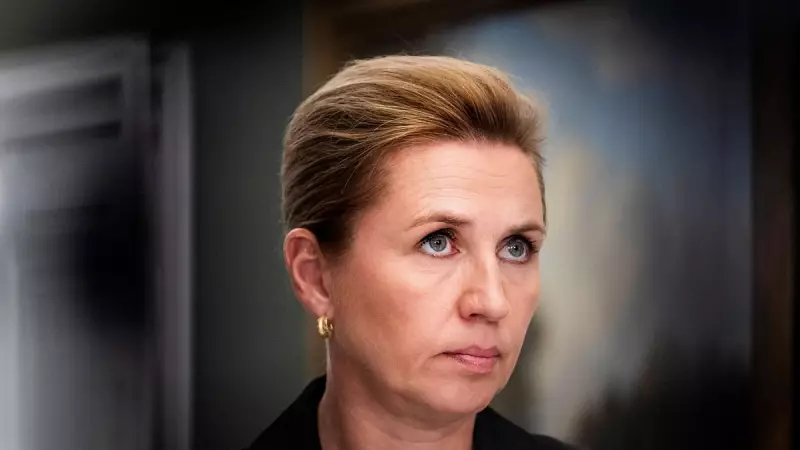
In a sharp rebuke to former US President Donald Trump, Denmark's Prime Minister Mette Frederiksen has publicly denounced any suggestion of the United States taking over Greenland, labeling the idea as making 'absolutely no sense'.
A Firm Statement from Copenhagen
The Danish leader issued a clear and unambiguous statement on Sunday, January 4, 2026, directly addressing the controversial remarks from the former American leader. Frederiksen categorically stated that the United States possesses no legal or moral right to annex any part of the Danish Realm, which consists of Denmark, Greenland, and the Faroe Islands.
Her comments were a direct response to Donald Trump's renewed threats regarding the potential acquisition of Greenland, the world's largest island. Trump has previously expressed interest in purchasing Greenland due to its strategic location and mineral resources, an offer Denmark flatly rejected during his presidency.

The Core of the Diplomatic Dispute
The heart of Frederiksen's argument rests on sovereignty and international law. She emphasized that Greenland is an autonomous territory within the Kingdom of Denmark, not a commodity to be bought or seized. The notion of a US annexation of Greenland is not only politically unacceptable but also fundamentally contradicts the principles of self-determination and respect for existing national boundaries.
This public statement escalates a long-simmering diplomatic tension that first flared during Trump's term in office. The revival of this topic signals potential foreign policy directions and has put US-Denmark relations under a fresh spotlight as the global community watches.
Implications and Regional Reactions
The Prime Minister's firm stance is expected to resonate strongly within the Arctic region and among European allies. It reinforces Denmark's commitment to protecting the integrity of its kingdom and supporting Greenland's own political journey. The statement also serves as a pre-emptive diplomatic shield against any future pressure campaigns.
Analysts suggest that such public disagreements, especially involving a figure like Donald Trump, could influence broader transatlantic partnerships. The situation underscores the delicate balance between strategic interests in the Arctic and the sovereignty of smaller nations. Frederiksen's unequivocal dismissal leaves little room for ambiguity, setting a clear boundary for any future discussions.
As of now, there has been no official reaction from Donald Trump's camp to the Danish Prime Minister's latest comments. However, the exchange highlights how historical colonial mindsets regarding territory continue to clash with modern international norms and the rights of sovereign states.