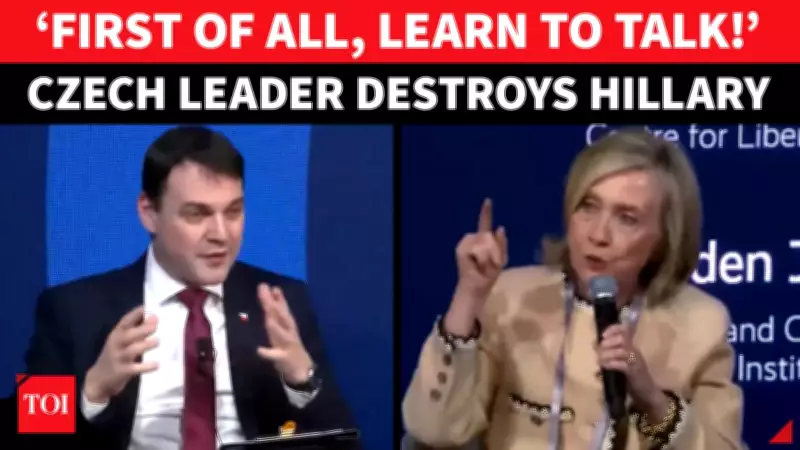
Czech Deputy Prime Minister Confronts Hillary Clinton Over 'Detached' U.S. Foreign Policy
A heated diplomatic clash erupted at the Munich Security Conference as Czech Deputy Prime Minister Petr Macinka directly confronted former U.S. Secretary of State Hillary Clinton over the legacy of American foreign policy decisions. The exchange highlighted deepening divisions within Western alliances regarding responsibility and strategic direction in today's volatile global landscape.
'Your Policies Were Detached From Reality'
During a fierce debate session, Deputy Prime Minister Macinka delivered a blunt critique, asserting that previous U.S. administrations pursued foreign policy strategies that were "far from reality." He argued that these approaches have directly contributed to the current geopolitical tensions and challenges facing the international community.
The Czech leader emphasized that what he characterized as unrealistic American policies created conditions that now require urgent reassessment and correction. His comments pointed to a growing sentiment among some European allies that historical U.S. leadership decisions warrant critical examination in light of contemporary security threats.

Widening Transatlantic Rifts
The confrontation between the Czech official and the former presidential candidate underscored significant differences emerging within Western alliances. These divisions span multiple critical areas including:
- Responsibility attribution for current international crises
- Strategic approaches to global security challenges
- Future direction of transatlantic cooperation frameworks
The Munich Security Conference, traditionally a forum for Western unity discussions, instead revealed fractures as European leaders increasingly voice concerns about American policy legacies. Macinka's direct challenge to Clinton represents a notable departure from diplomatic norms, signaling a more assertive European stance in security dialogues.
Context of Broader Geopolitical Debates
This exchange occurred against a backdrop of multiple international security developments, though the Czech Deputy Prime Minister's comments specifically targeted what he characterized as flawed American foreign policy approaches. The confrontation adds to ongoing debates about:
- How historical decisions influence current global tensions
- The evolving dynamics of U.S.-European relations
- Different perspectives on responsibility for international stability
The diplomatic incident highlights how security conferences are increasingly becoming arenas for airing substantive disagreements rather than merely reaffirming alliance solidarity. As geopolitical challenges multiply, such frank exchanges may become more common as nations reassess their strategic partnerships and historical policy impacts.