Cuba Rejects US Proposal to Remove President Diaz-Canel from Power
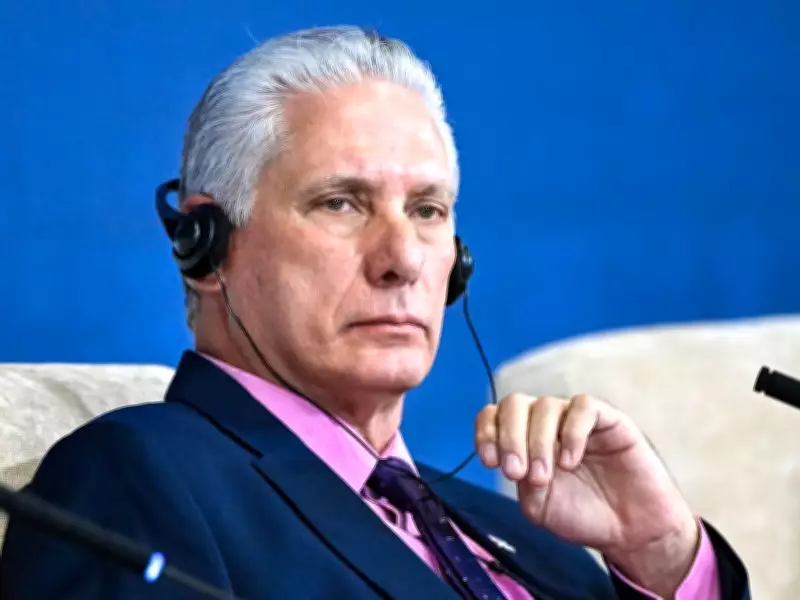
Cuba has issued a firm and unequivocal rejection of any suggestion that its political system or the term of its president, Miguel Diaz-Canel, could be subject to negotiation in talks with the United States. This declaration comes in response to reports indicating that the Trump administration is seeking to push Diaz-Canel from power, a move that Cuba views as a direct challenge to its national sovereignty.
Non-Negotiable Political System
Deputy Foreign Minister Carlos Fernandez de Cossio stated at a press conference on Friday, "I can categorically confirm that the political system of Cuba is not up for negotiation, and of course neither the president nor the position of any official in Cuba is subject to negotiation with the United States." This statement underscores Cuba's unwavering stance on maintaining its political integrity and leadership structure, despite external pressures.
Background of US-Cuba Talks
The bilateral discussions were initiated a week ago as Cuba faces deepening economic crises exacerbated by an oil blockade imposed during the Trump administration. President Donald Trump has previously asserted his ability to exert significant influence over Cuba, a sovereign neighbor, adding tension to the already strained relations. In this context, Cuba has expressed concerns about potential US aggression, with Diaz-Canel warning that the nation is prepared for any external threats.

Diaz-Canel emphasized, "We're not just crossing our arms. In the first place, we recognize that there could be aggression against Cuba." He further reinforced this defiant tone on social media, stating that any external aggressor would face "impenetrable resistance."
US Proposals and Cuban Response
Reports from USA Today and The New York Times have detailed US proposals that include an economic deal to relax trade restrictions but with an "off-ramp" for Diaz-Canel. Specifically, the Trump administration is allegedly seeking to remove him from power with two years remaining in his presidential term and five years left as leader of the Communist Party. Notably, these proposals would leave the Castro family, including former presidents Fidel and Raul Castro, untouched, with Raul Castro still holding considerable influence.
This strategy mirrors US actions in Venezuela, where President Nicolas Maduro was deposed, and power was transferred to his former vice president, Delcy Rodriguez. However, Cuba's political landscape differs significantly, with authority spread among senior Communist Party leaders, government officials, and the armed forces, rather than concentrated in a single individual as during the Castro era.
Complexities in Bilateral Discussions
Deputy Foreign Minister de Cossio, who leads the foreign ministry's office on US relations, declined to provide further details on the ongoing talks, including their location or timing. However, he highlighted several areas of mutual interest that could be discussed, such as:
- Trade relations, which have been severely impacted by the comprehensive US economic embargo against Cuba.
- Longstanding economic compensation claims, including Cuba's demands for damages caused by the embargo and American claims for properties nationalized after the 1959 revolution.
De Cossio noted, "These are very complex issues that can be discussed, but they require dialogue. They require sitting down and are legitimate matters." This indicates a willingness to engage on economic fronts while firmly rejecting any political interference.
Implications for US-Cuba Relations
The rejection of US proposals to remove Diaz-Canel highlights the deep-seated tensions between the two nations, rooted in decades of political and economic conflict. Cuba's stance reinforces its commitment to sovereignty and resistance against external pressures, setting a challenging precedent for future diplomatic engagements. As talks continue, the focus may shift to economic issues, but the fundamental political disagreements are likely to persist, shaping the trajectory of US-Cuba relations in the coming years.