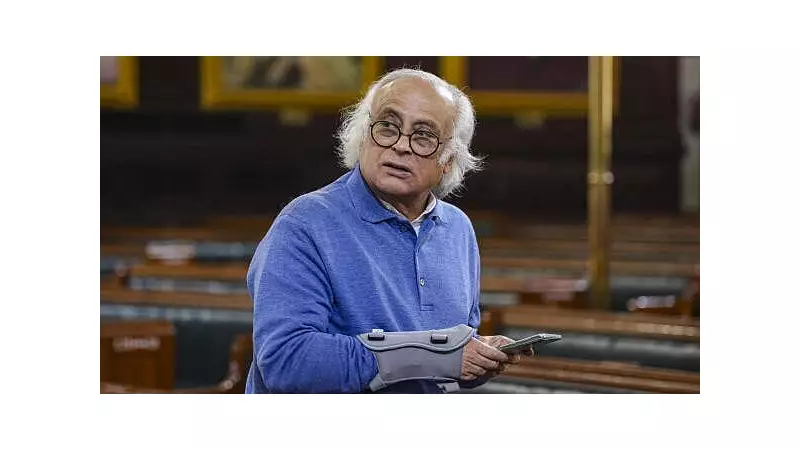
The Congress party has urgently called upon Prime Minister Narendra Modi to publicly address and clarify India's position following a significant diplomatic claim made by China. The controversy stems from a statement by a senior Chinese official asserting that Prime Minister Modi had endorsed China's potential role as a mediator in the ongoing Russia-Ukraine conflict during a recent conversation with Chinese President Xi Jinping.
A Concerning Diplomatic Assertion
This development unfolded after China's Vice Foreign Minister Sun Weidong told reporters that Prime Minister Modi had expressed support for China's mediation efforts in Ukraine during his discussion with President Xi on the sidelines of the Shanghai Cooperation Organisation (SCO) summit in Astana, Kazakhstan. The meeting occurred on July 4, 2024. The Congress party, through its senior leader and Rajya Sabha MP Jairam Ramesh, has labeled this claim as "very concerning" for India's independent foreign policy.
Jairam Ramesh emphasized the gravity of the situation by pointing out the apparent contradiction. He noted that if the Chinese claim is accurate, it would mark a major shift in India's diplomatic stance. Historically, India has maintained a position of strategic autonomy, advocating for peace and dialogue in Ukraine without explicitly backing any single nation's mediation platform. Ramesh stressed that the Prime Minister must immediately clear the air and confirm or deny whether such an endorsement was indeed given to President Xi.

The Call for Clarity and India's Strategic Stance
The Congress leader's statement underscores a critical demand for transparency in high-level diplomacy. "The Prime Minister must tell the country whether he indeed told the Chinese President that India supports China's mediation in the Ukraine war," Ramesh stated. He argued that the Chinese assertion, if left unaddressed by the Indian government, could lead to international misinterpretations about India's foreign policy alignment and its commitment to a balanced approach in the conflict.
This incident touches upon a core principle of India's foreign policy: non-alignment and strategic independence. For a nation that has carefully navigated its relations with both Russia and Western powers since the war began, any perception of tilting towards one side's mediation framework could have complex geopolitical repercussions. The Congress party's intervention highlights the domestic political scrutiny of diplomatic engagements, especially those involving China, with which India has a history of border tensions and strategic rivalry.
Potential Repercussions and the Need for a Response
The lack of an immediate official response from the Prime Minister's Office or the Ministry of External Affairs to the Chinese claim has created a vacuum, which the opposition is seeking to fill. The potential consequences of this ambiguity are multifaceted:
- International Perception: Allies and partners may seek clarification on India's stance regarding the Ukraine peace process.
- Domolitical Accountability: The opposition is framing this as an issue of governmental accountability on a sensitive foreign policy matter.
- Bilateral Dynamics: It adds another layer to the already intricate India-China relationship, where statements from high-level meetings carry significant weight.
As of now, the ball lies in the government's court. The Congress demand sets the stage for a necessary clarification that could define India's diplomatic posture in the coming days. The nation awaits a clear statement from the highest levels to either validate or dispel the narrative put forward by Chinese officials, ensuring that India's foreign policy remains unambiguous and self-determined.