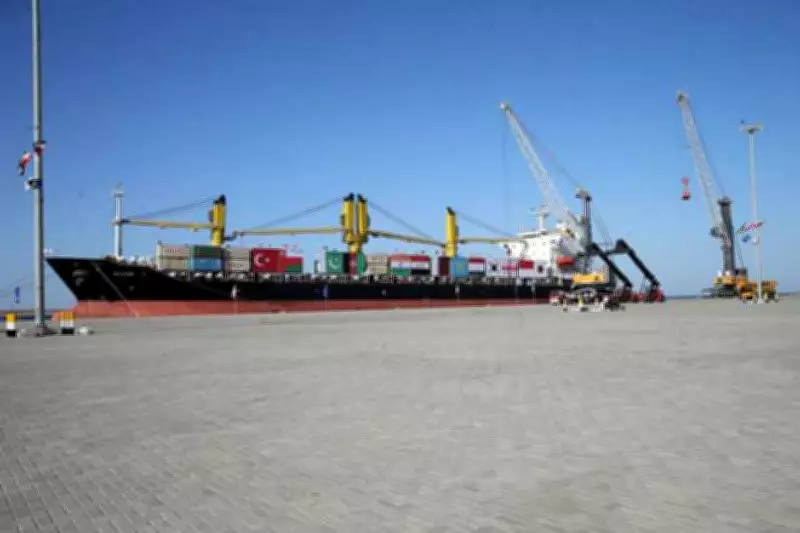
Congress Condemns Modi Government for Chabahar Port Setback in Central Asia
The Congress party has launched a sharp critique against the Narendra Modi-led government, labeling the current status of the Chabahar port project as a significant strategic setback for India's diplomatic efforts in Central Asia. This criticism comes in the wake of the Union Budget for 2026/27, which notably omitted any financial allocation for the port, raising questions about India's continued involvement in the initiative.
Historical Context and Allegations of Repackaging
Congress general secretary Jairam Ramesh, in a detailed statement, traced the origins of India's engagement with the Chabahar port back to the late 1990s. He emphasized that the project was initially part of a broader India-Afghanistan-Iran cooperation strategy. According to Ramesh, a major milestone was achieved in May 2013 when the Union Cabinet, under then-Prime Minister Manmohan Singh, approved an initial investment of USD 115 million for Chabahar. This decision was made concurrently with India's implementation of the India-US nuclear agreement signed in 2008.
Ramesh further alleged that in October 2014, the Modi government repackaged this initiative, presenting it as part of Prime Minister Modi's vision without acknowledging its origins under the previous administration. He accused the Prime Minister of being "self-obsessed" and failing to recognize the essential continuity required in governance.

Budget Omission and Strategic Implications
The absence of funding for Chabahar in the latest budget has sparked concerns about India's exit from the project or the fulfillment of its investment commitments. Ramesh pointed out that Chabahar, located approximately 170 kilometers west of Pakistan's Gwadar port—a facility constructed by China—is now "not on the horizon" for India. This development is described as the second major strategic blow to India's Central Asian diplomacy, following the closure of India's air force base in Ayni, near Dushanbe in Tajikistan.
The Congress leader underscored the geopolitical significance of Chabahar, highlighting its role as a counterbalance to Chinese influence in the region through the Gwadar port. The lack of budgetary support is seen as undermining India's ability to maintain a strategic foothold in Central Asia, potentially ceding ground to rival powers.
Broader Diplomatic and Political Ramifications
This issue has ignited a broader debate on India's foreign policy consistency and strategic priorities. The Congress party's accusations suggest a pattern of neglect or mismanagement in key diplomatic initiatives, which could have long-term implications for India's regional influence. The comparison to the Ayni air base closure adds weight to the argument that India is facing repeated setbacks in its Central Asian engagements.
As the political discourse intensifies, the Modi government faces mounting pressure to clarify its stance on Chabahar and address the allegations of strategic missteps. The outcome of this controversy may shape future policy decisions and India's diplomatic trajectory in a volatile region.