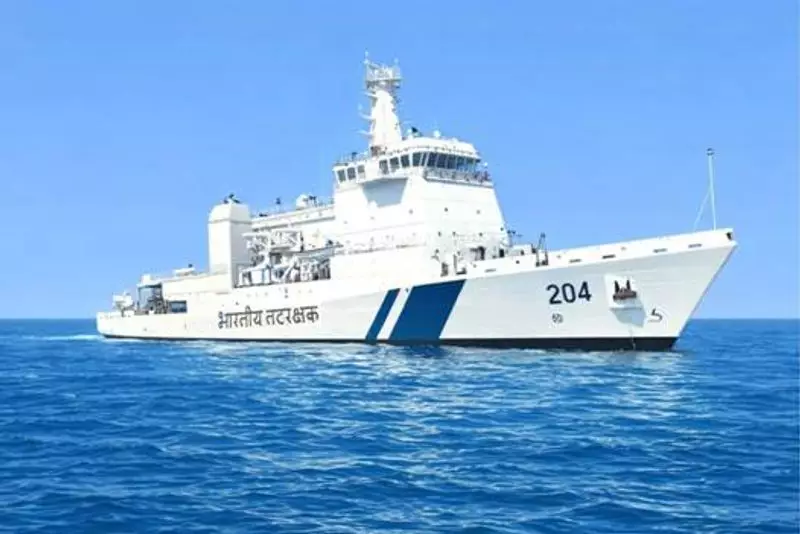
In a landmark move for gender inclusion in India's maritime defence forces, the Indian Coast Guard's largest offshore patrol vessel, ICGS Samarth, has become the platform enabling women officers to take on critical sea-going duties. This strategic deployment opens new vistas for women in domains of territorial security and environmental protection at sea, a sphere traditionally limited to shore-based roles.
A Historic Deployment for Gender Parity
The vessel, ICGS Samarth, was commissioned in 2017 and is based in Goa. For years, it has been a workhorse of the Coast Guard's fleet. However, its recent operational history has been quietly revolutionary. The ship has successfully deployed with women officers serving as assistant commandants in vital sea-going capacities. This includes roles directly related to navigation, operations, and engineering – the core functions of any maritime security platform.
This initiative shatters a long-standing barrier. Previously, women officers in the Coast Guard were largely restricted to domains like law, logistics, and communications, primarily in shore establishments. The experience and data gathered from the postings on Samarth have been instrumental. They provided the necessary proof of concept to the top brass, demonstrating that women officers are fully capable of handling the demanding and often perilous conditions of extended sea deployments.

Paving the Way for Broader Integration
The success aboard Samarth has had a direct and powerful policy outcome. It gave the Indian Coast Guard leadership the confidence to announce a significant policy expansion. In a first for the force, women officers will now be inducted into the general duty branch. This branch is the backbone of sea-going operations, responsible for the core tasks of navigation, ship handling, and weapons systems.
Furthermore, the path is now clear for women to serve in the marine engineering and electrical engineering branches on board advanced vessels like Samarth. This holistic integration means women will be involved in every aspect of a ship's functioning, from steering it through rough seas to ensuring the smooth operation of its complex machinery. The first batch of women recruits for these ground-breaking sea-going roles is expected to commence training shortly, marking the beginning of a new era.
Strategic and Operational Significance
The timing and platform for this change are highly significant. ICGS Samarth is no ordinary ship. As the largest and one of the most technologically advanced offshore patrol vessels in the Coast Guard's inventory, it represents the cutting edge of the force's capabilities. Its primary duties are multifaceted and critical to national interests:
- Maritime Security and Sovereignty: Patrolling India's vast Exclusive Economic Zone (EEZ), intercepting suspicious vessels, and preventing threats like terrorism, piracy, and smuggling.
- Search and Rescue (SAR): Leading complex rescue operations for fishermen and mariners in distress across the volatile Indian Ocean region.
- Environmental Protection: Playing a key role in combating marine pollution, containing oil spills, and enforcing environmental laws to protect India's coastal ecology.
By serving on such a premier asset, women officers are now positioned at the very heart of the Coast Guard's most crucial missions. Their involvement enhances the force's operational readiness and brings diverse perspectives to complex problem-solving at sea.
Conclusion: A Watershed Moment for Indian Maritime Defence
The story of ICGS Samarth is more than just about a single ship. It is a testament to a progressive, evidence-based approach to institutional change. By creating a successful model on its flagship platform, the Indian Coast Guard has effectively normalized the presence of women in core operational sea roles. This move aligns with broader national efforts towards gender equality in the armed forces and leverages the full talent pool for enhancing maritime domain awareness and security.

The waves created by Samarth's pioneering crew will resonate far beyond its wake. They signal a future where India's maritime guardianship is a shared responsibility, with women officers standing watch on the bridge, managing engine rooms, and safeguarding the nation's blue frontiers with equal dedication and skill.