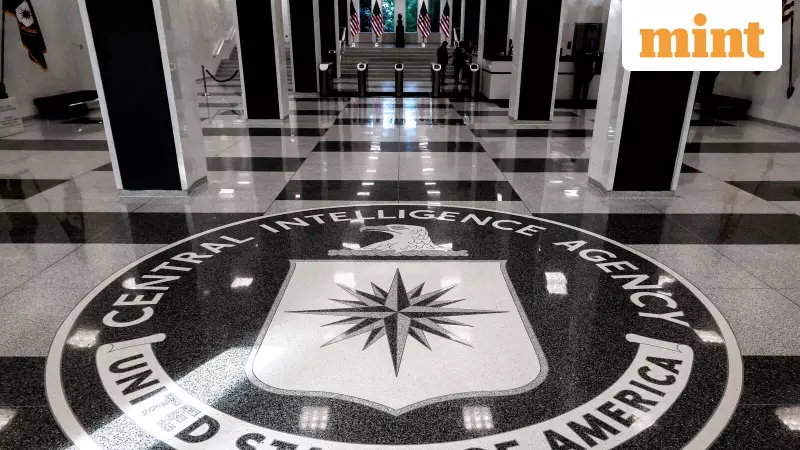
In a significant development shaping US policy towards Venezuela, a recent classified intelligence assessment by the Central Intelligence Agency (CIA) concluded that top loyalists of the Nicolás Maduro regime would be best positioned to lead a temporary government and maintain stability if the autocrat lost power. This analysis was a key factor in President Trump's controversial decision to back Maduro's Vice President, Delcy Rodríguez, over the US-backed opposition leader and Nobel laureate, María Corina Machado, following Maduro's dramatic capture and extradition to the United States.
The CIA's Stability Assessment and Trump's Decision
According to people familiar with the matter, the CIA's assessment was briefed to President Trump in recent weeks and shared with a small circle of senior administration officials. The report did not advocate for Maduro's removal but evaluated the domestic scenario in Venezuela should he fall from power. It found that the country's opposition, led by figures like María Corina Machado and Edmundo González—widely seen as the actual winner of the 2024 election—would struggle to lead a temporary government.
The intelligence analysis argued that near-term stability could only be maintained if Maduro's replacement had the backing of Venezuela's armed forces and political elites. The report specifically named Vice President Delcy Rodríguez and two other top regime figures as possible interim rulers who could keep order. While the other two were not publicly identified, they are believed to be powerful hard-liners Interior Minister Diosdado Cabello and Defense Minister Vladimir Padrino, who command the police and military.

Blindsiding the Opposition and Shifting US Narratives
President Trump's embrace of Rodríguez and rejection of the Machado-led opposition, announced on Saturday, blindsided Machado's aides and her many supporters in the US. Trump stated that Machado "doesn't have the support or the respect within the country" to take over in a democratic transition. This marked a stark reversal from his previous public posture. In January, Trump had praised Machado on Truth Social for "peacefully expressing the voices and the WILL of the Venezuelan people." Key allies like Secretary of State Marco Rubio had been prominent backers, even nominating her for the Nobel Peace Prize she eventually won.
Privately, however, Trump has been wary of Venezuela's opposition since his first term, according to Juan Cruz, a former top White House official for Latin America under Trump. Previous efforts to isolate Maduro and spur rebellion failed, reinforcing Trump's view that the opposition "overpromised and underperformed." The CIA's recent assessment solidified this pragmatic, stability-first approach.
The Path Forward and Regional Implications
The US administration is now navigating a complex path with acting President Delcy Rodríguez, whom Washington views as a pragmatic operator. Despite initial defiance, Rodríguez has signaled willingness to work with the US and has engaged with Secretary Rubio. The Trump administration has offered varying tactics, from Rubio's suggestion of a military "quarantine" to intercept oil tankers, to Trump's declaration of "We're in charge" and demand for "total access" to Venezuela's oil resources to rebuild the country.
Latin America analysts have long cautioned that ousting Maduro without a capable replacement could plunge Venezuela into a deeper security crisis, empowering armed factions and criminal groups. David Smilde, a Tulane University professor, called the idea of Machado sweeping into power "magical realism." He suggested the better course was to compel Rodríguez to initiate a transition, but noted the apparent lack of active US negotiations.

The White House, through press secretary Karoline Leavitt, defended the decisions as "realistic" moves to align Venezuela with US interests and benefit its people. Meanwhile, Nicolás Maduro, extracted to New York City in a raid enabled by CIA intelligence, has pleaded not guilty to federal narco-terrorism charges. The operation that captured him and his wife leveraged a CIA source within his inner circle and stealth drone surveillance, culminating in a Delta Force raid.