This week witnessed significant geopolitical manoeuvres from China, involving trade measures against Japan, multinational military exercises, and the reverberations of a historic legal case in the United States. These developments highlight the complex interplay of trade, security, and human rights in contemporary international relations.
China Tightens Export Controls on Japan Over Remilitarisation Concerns
In a move that has escalated diplomatic tensions, China instituted export controls on dual-use items destined for Japan earlier this week. The Chinese government framed this action as a necessary step to curb Japan's "remilitarization" and potential nuclear weapons acquisition attempts. Dual-use items refer to goods and technologies that can serve both civilian and military purposes.
According to a Reuters report, China maintains an export control list encompassing approximately 1,100 such items and technologies. Once an item is on this list, Chinese manufacturers must obtain a special licence for overseas shipment. The report indicated that the list includes at least seven categories of medium and heavy rare earths, though the specific items affected by the Japan ban were not immediately detailed. Authorities later clarified that rare earth minerals used primarily in automobile manufacturing would not be included, but their potential military applications could be impacted.

The Japanese government has reacted strongly, labelling the controls as "absolutely unacceptable". However, analysts from the Financial Times suggest the immediate impact may be limited, given existing stringent controls on critical minerals like gallium, germanium, and graphite.
This trade measure is viewed as the latest in a series of Chinese responses to Japan's foreign policy stance. The friction intensified after Japanese Prime Minister Sanae Takaichi's remarks in November 2025, where she suggested Japan could militarily intervene in the event of a Chinese attack on Taiwan. China considers Taiwan a core internal matter and a "red line", interpreting such statements as direct interference.
BRICS Nations Converge for "Will for Peace 2026" Naval Drills in South Africa
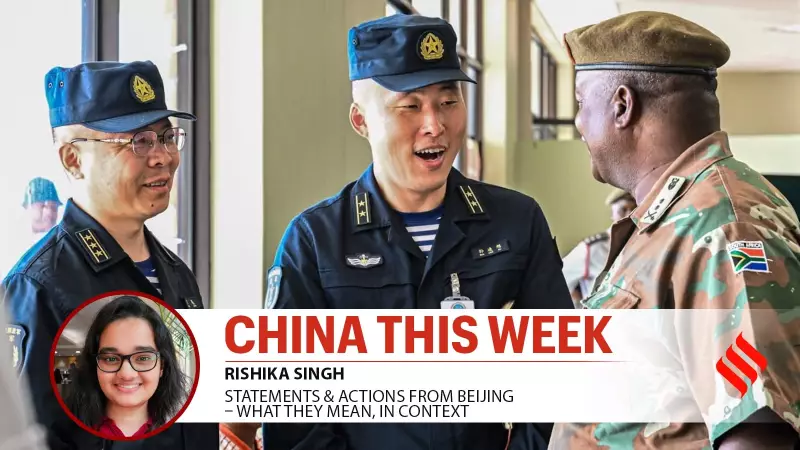
On Friday, January 9, a pre-scheduled multinational naval exercise commenced off the coast of South Africa, featuring participation from China, Iran, and Russia. Held under the banner "Will for Peace 2026", the week-long drill will focus on counter-terrorism and rescue operations. This gathering is notable as it involves members of the expanded BRICS grouping, which now includes 11 nations, among them India.
Media reports highlighted the timing of the exercise, noting it began just days after recent US military action in Venezuela. Vessels from the participating nations were seen sailing into South Africa's primary naval base at Simon’s Town on the Cape Peninsula.
While South Africa has hosted similar exercises since 2019, the 2023 edition and the current one carry heightened geopolitical significance due to Russia's ongoing invasion of Ukraine and the resultant Western criticism. South Africa's role as host, alongside nations often at odds with US foreign policy, underscores its complex diplomatic balancing act. This move is also seen as part of President Cyril Ramaphosa's strategy to manage relations with major global powers, following his visit to Washington, D.C., and meetings with US President Donald Trump, during which he forcefully denied allegations of persecuting the country's white minority.
US Supreme Court to Hear Landmark Cisco Case Involving Falun Gong Allegations
In a significant legal development, the United States Supreme Court has agreed to hear a case involving technology giant Cisco Systems. The company is appealing a 2023 ruling that revived a 2011 lawsuit. The lawsuit alleges that Cisco knowingly created and supplied technology that the Chinese government used to surveil and suppress members of the Falun Gong spiritual movement.

Both Cisco and the Trump administration have argued against using the 1798 Alien Tort Statute in this case. This centuries-old law allows foreign nationals to seek justice in US courts for violations of international law. Their broader argument opposes holding US corporations liable for human rights violations that occur overseas. Cisco maintains that the products it sold were legal under US law at the time.
The case was filed by an organisation representing Falun Gong members. The movement, founded in China in 1992 by Li Hongzhi, blends meditative practices with teachings rooted in Buddhism and Taoism. It gained massive popularity in the 1990s, culminating in a large gathering of over 10,000 followers in Beijing. Perceiving it as a growing threat to its authority, the Chinese government banned Falun Gong in 1999, labelling it an "evil cult". Members have since accused the state of using repression and violence to dismantle the group.
The Supreme Court's decision to hear this appeal puts a spotlight on the extraterritorial liability of multinational corporations and the enduring international fallout from China's domestic crackdown on the movement nearly three decades ago.