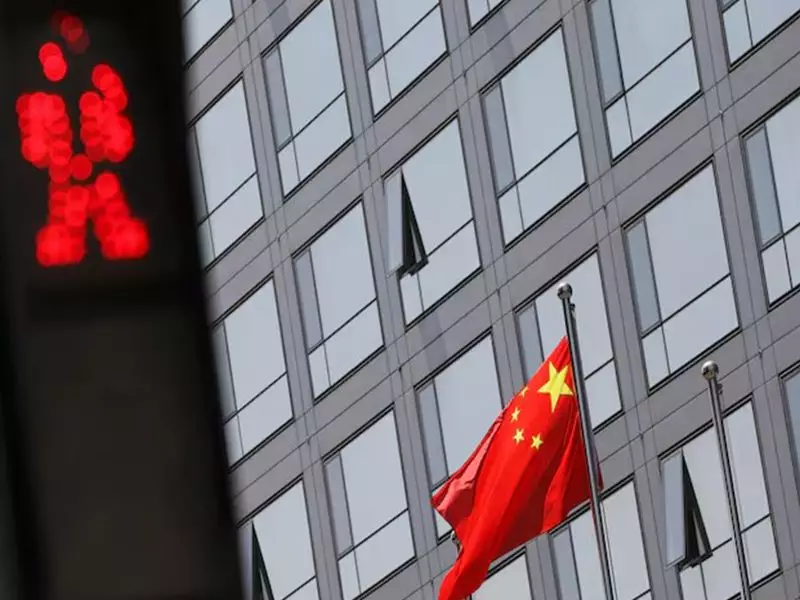
China has issued a sharp rebuke against the United States following recent military strikes in Venezuela, denouncing the actions as serious violations of international law. The Chinese foreign ministry spokesperson, Mao Ning, delivered the condemnation during a regular press briefing in Beijing, marking a significant escalation in diplomatic tensions between the two global powers.
China's Official Condemnation and Accusations
During the press conference, spokesperson Mao Ning did not mince words. She explicitly stated that China firmly opposes such hegemonic acts of power politics by the United States. The core of Beijing's argument is that the US operations constitute a blatant breach of the basic norms governing international relations. Mao emphasized that these actions represent a severe violation of Venezuela's sovereignty and territorial integrity, principles that China consistently champions in its foreign policy discourse.
The Chinese foreign ministry's statement directly challenges the legal and moral justification presented by Washington for the strikes. By invoking terms like "hegemony" and "power politics," China positions itself as a defender of a multilateral world order against unilateral US interventionism. This rhetoric is a staple of Chinese diplomatic language when criticizing American foreign policy, particularly in regions like Latin America, where Beijing has steadily expanded its economic and political influence over the past decade.

Context of the US Military Action
The incident that sparked this diplomatic firestorm involves targeted military strikes conducted by the United States within Venezuelan territory. While the specific date and precise location of the strikes were not detailed in the initial reports, the action is understood to be part of the ongoing US pressure campaign against the government of President Nicolás Maduro. The United States, along with dozens of other countries, does not recognize Maduro's 2018 re-election as legitimate and has imposed crippling economic sanctions on the oil-rich nation.
Washington has historically justified such interventions by citing threats to regional stability, the need to combat drug trafficking, or concerns over terrorism. However, from the perspective of China and Venezuela, these are pretexts for undermining a sovereign government. Venezuela is a key strategic partner for China in Latin America, with extensive Chinese loans and investments in its oil sector. Therefore, any US action against Caracas is viewed in Beijing as a direct threat to its economic interests and a challenge to its growing global footprint.
Broader Implications for International Relations
This condemnation is far more than a routine diplomatic protest. It signals a deepening of the geopolitical fault lines between the US and China, with the Global South becoming a primary arena for their competition. China's vocal support for Venezuela reinforces its narrative of being a champion for developing nations against Western coercion. This stance is likely to resonate in other countries that have been targets of US sanctions or military action, potentially bolstering Beijing's soft power.
Furthermore, the accusation of violating international law carries significant weight. It aims to diplomatically isolate the United States and question its moral authority on the world stage. The episode underscores how conflicts in one region can rapidly become flashpoints in the broader US-China rivalry. It also highlights the increasing willingness of China to publicly and forcefully condemn US military actions, moving beyond mere disagreements on trade or technology.
The fallout from this exchange is likely to continue. It may affect ongoing negotiations on other bilateral issues between Washington and Beijing and could lead to increased Chinese support for Venezuela, both politically and economically. As the two superpowers navigate an increasingly contentious relationship, sovereignty and the rules-based international order remain central, yet deeply contested, concepts in their diplomatic battles.