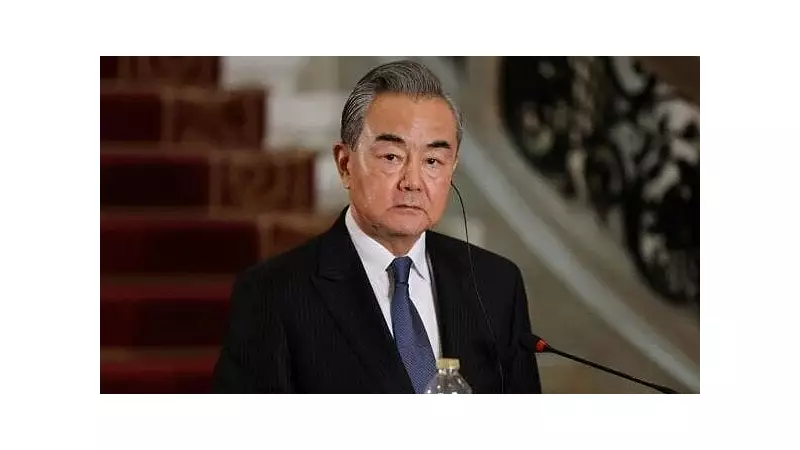
China has issued a sharp rebuke to the United States, declaring it "cannot accept" countries positioning themselves as the "world's judge." This strong statement from Beijing's foreign ministry came in direct response to the recent US capture of two relatives of Venezuelan President Nicolas Maduro.
Beijing's Firm Stance on Sovereignty and Non-Interference
The diplomatic friction erupted after US authorities detained two of President Maduro's family members. The individuals in question are Yosser Gavidia and her husband, Luis Jose Marcano Diaz. They were apprehended on the Caribbean island of Bequia, part of St. Vincent and the Grenadines, on April 12, 2024. The arrest was executed on an international warrant linked to alleged sanctions violations.
Addressing the media, Chinese Foreign Ministry Spokesperson Lin Jian articulated Beijing's position with clarity. He emphasized that China consistently advocates for the principle of non-interference in the internal affairs of sovereign states. "China always believes that all countries are equal," Lin stated, underscoring a core tenet of China's foreign policy. He further argued that the international community should foster a cooperative environment based on mutual respect, rather than one of confrontation and unilateral punitive actions.

The US Action and Venezuela's Response
The US action targets individuals connected to the government of Nicolas Maduro, which Washington does not recognize as legitimate. The US, along with dozens of other nations, considers opposition figure Juan Guaido the rightful interim president of Venezuela. The arrests are part of a broader strategy to enforce sanctions and pressure Maduro's administration.
Venezuela has condemned the arrests as a "kidnapping" and a flagrant violation of international law. The Maduro government accuses the US of overreach and using its global influence to persecute political opponents and their families. This incident adds another layer of complexity to the prolonged political and economic crisis in Venezuela, where Maduro continues to hold power despite widespread international condemnation and crippling economic sanctions.
Broader Implications for Global Diplomacy
China's reaction is not merely about Venezuela but speaks to a larger geopolitical contest. The phrase "world's judge" is a pointed critique of what Beijing and other nations often describe as US hegemony and the unilateral application of American law on a global scale. This stance resonates with many developing countries that are wary of Western-led interventionism.
This incident highlights the deepening divide between major powers over the norms of international engagement. On one side, the US and its allies justify such actions as necessary to uphold sanctions regimes, combat corruption, and promote democracy. On the other, China, Russia, and others champion a world order strictly built on national sovereignty and the primacy of the United Nations Charter, opposing what they view as arbitrary enforcement by a single powerful state.
The fallout from this event is likely to influence diplomatic relations beyond the immediate parties. It reinforces the alignment between China and Venezuela, which is a significant recipient of Chinese investment and political support. Furthermore, it sets a precedent for how Beijing may respond to similar US actions against allied nations in the future, potentially complicating Washington's foreign policy efforts in Latin America and elsewhere.
As the situation develops, the international community watches closely. The core question remains whether diplomatic channels can manage these clashes of principle or if they will lead to further fragmentation in global governance. For now, China's message is unequivocal: it rejects any nation's self-appointed role as the global arbiter of justice.