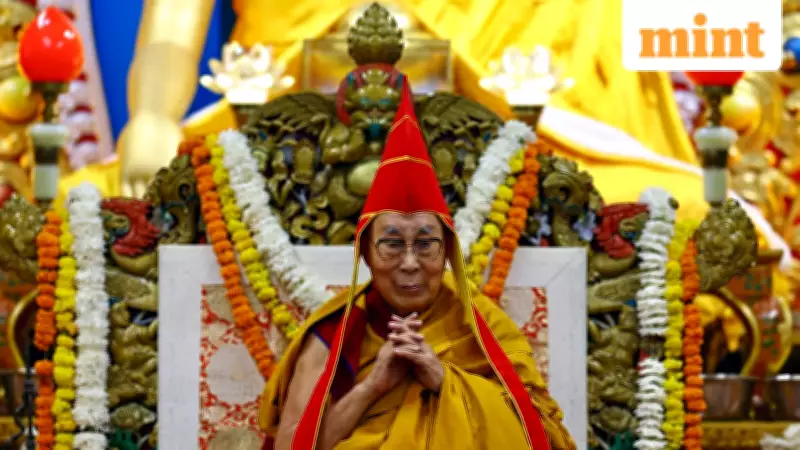
China has voiced strong opposition and expressed significant displeasure regarding the decision to confer a Grammy Award upon the Dalai Lama, labeling the action as a deliberate instrument for what it terms "anti-China political manipulation." The controversy erupted after the 90-year-old Tibetan Buddhist spiritual leader was honored with the prestigious award this past Sunday for his literary work, "Meditations: The Reflections of His Holiness the Dalai Lama."
China's Firm Stance Against the Award
In a sharply worded statement, China's Foreign Ministry spokesperson Lin Jian articulated Beijing's unwavering position. "It is well known that the 14th Dalai Lama is not merely a religious figure but a political exile engaged in anti-China separatist activities under the guise of religion," Lin declared. He further emphasized, "We firmly oppose the relevant party using the award as a tool for anti-China political manipulation." This reaction underscores the deep-seated tensions between China and the Dalai Lama, who has been in exile from Tibet since 1959 following a Chinese military crackdown on an uprising.
Dalai Lama's Response and Exile Life
The Dalai Lama, currently residing in Dharamshala, India, responded to the Grammy recognition with a message of "gratitude and humility." In a statement published on his official website, he reflected that he views this honor "as a recognition of our shared universal responsibility." Over the decades, he has consistently advocated for greater autonomy for Tibet, a stance that Beijing vehemently rejects, asserting that the region is an integral and inseparable part of China. His life in exile began after fleeing to ensure his safety, and he has since become a symbol of the Tibetan cause on the global stage.

Succession Plan and Ongoing Tensions
Adding another layer to the already strained relations, the Dalai Lama reaffirmed in 2025 his intention to appoint a successor, a move that has further exacerbated tensions with China. According to Tibetan Buddhist traditions, the Dalai Lama is believed to be reborn after death, a spiritual process deeply rooted in religious customs rather than political authority. The spiritual leader has previously indicated that his reincarnation would occur in the "free world," explicitly outside atheist and communist China—a claim that Beijing has categorically dismissed.
Beijing's Conditions for Succession
Chinese authorities maintain a firm stance on the succession issue, insisting that any future recognition of a Dalai Lama must adhere strictly to Chinese law, follow established religious rituals, and respect historical conventions. Ultimately, Beijing asserts that such a process must receive official approval from the central government. This position highlights the ongoing geopolitical and ideological divide, with China viewing the Dalai Lama's actions and international recognition as challenges to its sovereignty and territorial integrity.
The Grammy Award incident thus serves as a poignant reminder of the enduring conflicts surrounding Tibet, the Dalai Lama's legacy, and the complex interplay between religion, politics, and international diplomacy. As both sides hold their ground, the situation continues to reflect broader issues of autonomy, human rights, and global perceptions in the context of China's rise on the world stage.