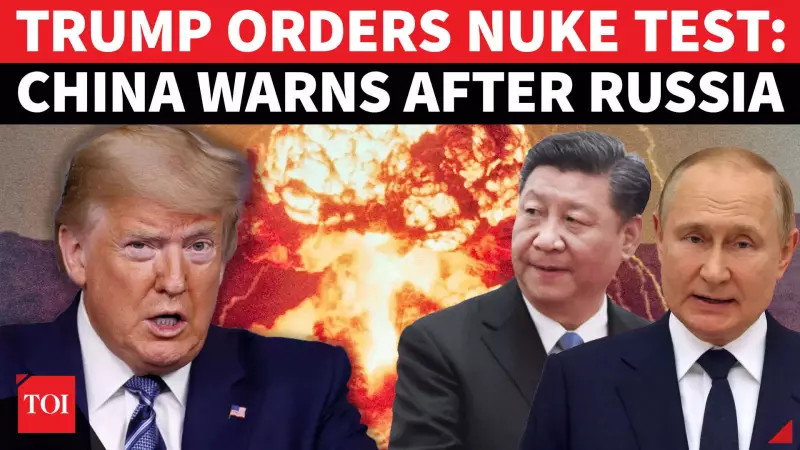
The international stage is witnessing a dramatic escalation of tensions as former President Donald Trump's administration has reportedly ordered nuclear weapons testing, triggering furious reactions from global powers.
China has erupted in anger over the controversial decision, with President Xi Jinping issuing a stern warning to the United States to comply with international nuclear testing bans. The move represents one of the most significant confrontations between the two superpowers in recent months.
Global Nuclear Diplomacy in Crisis
The testing order comes at a particularly sensitive time in international relations, with multiple nations expressing deep concern about the potential consequences. Diplomatic channels between Washington and Beijing are reportedly strained as Chinese officials demand immediate clarification and reversal of the decision.

China's foreign ministry has been particularly vocal, condemning what they describe as "a dangerous provocation that threatens global security and stability." The response from Beijing has been described by analysts as one of the strongest diplomatic rebukes in recent memory.
International Community Reacts
Other nations are closely monitoring the situation, with many expressing support for maintaining the Comprehensive Nuclear-Test-Ban Treaty. The developments have raised concerns about a potential new arms race and the erosion of longstanding international agreements governing nuclear weapons.
Security experts warn that this confrontation could have far-reaching implications for global security architecture. The timing is especially critical given existing geopolitical tensions in multiple regions around the world.
The situation continues to develop rapidly, with diplomatic efforts underway to de-escalate the confrontation. World leaders are watching closely as this nuclear standoff between economic superpowers unfolds, potentially reshaping international power dynamics for years to come.