China has issued a stern demand for the immediate release of Venezuelan President Nicolas Maduro and his wife, Cilia Flores, following their capture by United States forces in a large-scale military operation. The Chinese Foreign Ministry condemned Washington's actions, urging it to cease attempts to topple the Venezuelan government and instead pursue dialogue.
China's Strong Condemnation and Demands
In an official statement released on Sunday, China expressed grave concern over the US operation that forcibly seized President Nicolas Maduro and his spouse and removed them from Venezuela. The ministry stated that this move constitutes a clear violation of international law and the fundamental norms governing international relations. It also contravenes the purposes and principles enshrined in the United Nations Charter.
Calling for urgent action, the Chinese government outlined its demands: "China calls on the US to ensure the personal safety of President Nicolas Maduro and his wife, release them at once, stop toppling the government of Venezuela, and resolve issues through dialogue and negotiation." This response came a day after a Chinese Foreign Ministry spokesperson said Beijing was "deeply shocked" by US President Donald Trump's announcement of the airstrikes and capture.

A Major Strategic Blow for Beijing
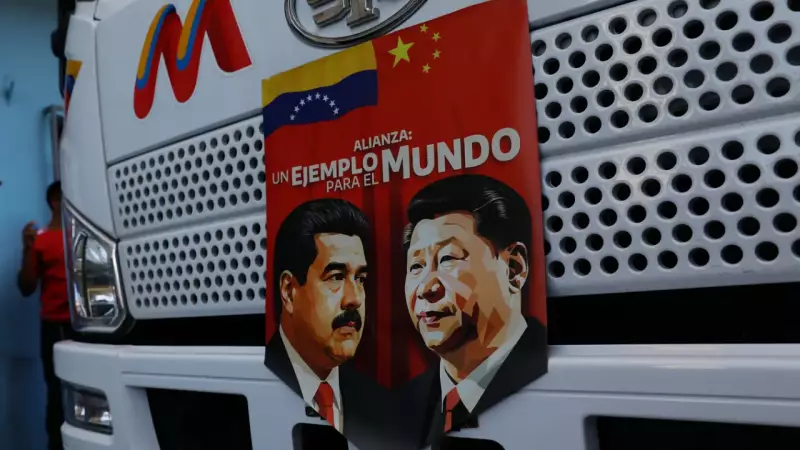
The fall and capture of the Maduro government is viewed as a significant strategic setback for China. Beijing has cultivated close strategic ties with Venezuela for over two decades, dating back to the era of Maduro's predecessor, Hugo Chávez. This partnership has been a cornerstone of China's engagement in Latin America, built on a foundation of:
- Political alignment and shared opposition to US and Western influence in the region.
- Deep energy cooperation, with China becoming a major buyer of Venezuelan crude oil despite stringent US sanctions.
- Substantial financial investment, with China serving as Venezuela's primary lender, extending tens of billions of dollars in loans backed by oil.
This relationship has allowed China to secure vital energy resources while expanding its geopolitical footprint in America's backyard.
Beijing Accuses US of Hegemony and Threat to Peace
In its statements, China framed the US action as a hegemonic act that blatantly violates Venezuela's sovereignty. The Foreign Ministry warned that such unilateral use of force against a sovereign state and its leader poses a direct threat to peace and security across Latin America and the Caribbean region.
"China firmly opposes it. We call on the US to abide by international law and the purposes and principles of the UN Charter, and stop violating other countries' sovereignty and security," the ministry's statement emphasized. Beijing's reaction underscores its commitment to a foreign policy principle of non-interference and its growing willingness to diplomatically challenge US actions it perceives as overreach, particularly in regions where it has vested economic and strategic interests.