China has issued a sharp rebuke to the United States following the dramatic capture of Venezuelan President Nicolas Maduro. Beijing's top diplomat stated unequivocally that no nation should assume the role of the world's police, framing the US action as a violation of international norms.
Beijing's Strong Condemnation
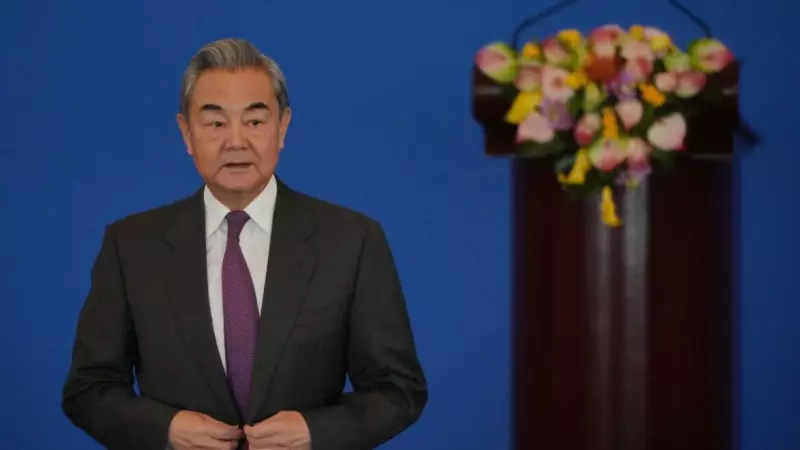
Chinese Foreign Minister Wang Yi made his first public remarks on the incident during a meeting with his Pakistani counterpart, Ishaq Dar, in Beijing on Sunday. "We have never believed that any country can act as the world's police," Wang declared. He emphasised that the sovereignty and security of all countries must be respected under established international law.
These comments came a day after shocking images emerged of President Maduro blindfolded and handcuffed, causing upheaval in Venezuela. Maduro is currently held at a detention centre in New York, awaiting a court appearance on Monday to face drug-related charges.

A Major Blow to Strategic Partnership
The US action has directly strained China's significant partnership with the Venezuelan government in Caracas. A Chinese government official, speaking to Reuters, labelled the event "a big blow to China." The official revealed that China had aimed to project itself as a dependable ally to Venezuela, a position now compromised.
This tension is amplified by President Donald Trump's statement that the US will oversee Venezuela's government for the time being. China has been a crucial supporter of Venezuela, especially after the tightening of US sanctions in 2017. The economic ties are substantial:
- In 2024, China purchased Venezuelan goods worth approximately $1.6 billion, nearly half of which was crude oil.
- By 2018, Chinese state-owned oil companies had invested around $4.6 billion in Venezuela's energy sector, according to data from the American Enterprise Institute.
Personal and Diplomatic Links
The connection between the two nations extends beyond trade and energy. In a personal diplomatic detail, it was noted that President Maduro's son was enrolled at China's prestigious Peking University. He began his studies there in 2016 and was recorded visiting the university again in 2024. Chinese officials expressed uncertainty about whether he would return following his father's capture, despite years of diplomatic engagement with Caracas centred on his education and ties to China.
China's firm stance underscores its commitment to a foreign policy principle opposing what it views as unilateral intervention by Western powers. The capture of Maduro has not only triggered a geopolitical confrontation but also put Beijing's long-term investments and strategic relationships in Latin America at risk.