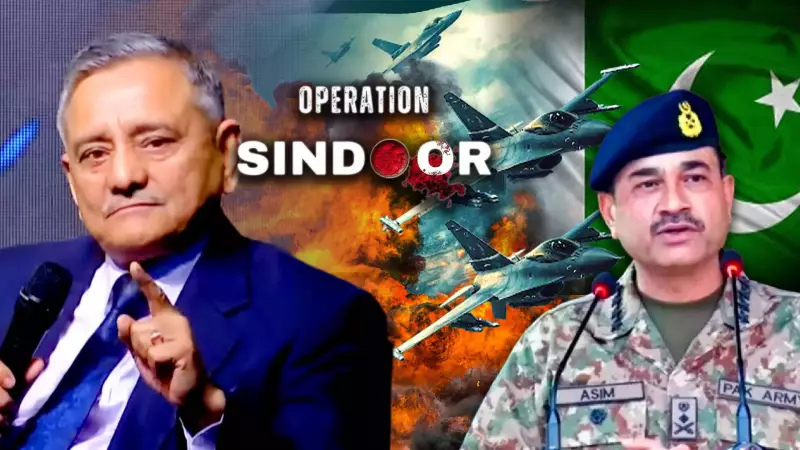
India's Chief of Defence Staff, General Anil Chauhan, has provided a critical analysis of the political and military tremors shaking Pakistan in the aftermath of Operation Sindoor. He disclosed that the operation's exposure of severe command failures forced Islamabad into hastily pushing through major constitutional and military reforms.
Pakistan's Reactive Reforms: A Sign of Weakness
General Anil Chauhan, speaking on January 10, 2026, pointed out that Pakistan's swift decision to abolish its Joint Chiefs of Staff Committee system and centralise military authority under a single defence commander was a direct reaction to the setbacks suffered during Operation Sindoor. The CDS warned that this move, rather than projecting strength, fundamentally reflects deep-seated insecurity within the Pakistani establishment.
He suggested that such a drastic centralisation of power, executed in a rushed manner, could potentially trigger internal instability within Pakistan's complex power structures. The reforms, according to Gen Chauhan, were compelled by the operation's revelation of glaring gaps in inter-service coordination and command.

India's Path: Collective Responsibility and Jointness
Contrasting Pakistan's approach, the CDS clarified the foundational principles of India's own military reforms. He emphasised that the office of the CDS in India operates on collective responsibility, not personal command. This model is designed to ensure genuine 'jointness' across the Army, Navy, and Air Force, extending into new and emerging domains of warfare.
General Chauhan stressed a dual-pronged preparedness for the Indian armed forces. While acknowledging that future conflicts will increasingly hinge on technology and non-kinetic means, he asserted that India must remain fully prepared for the possibility of brutal, high-intensity contact warfare. This readiness, he indicated, is essential for potential threats from both Pakistan and China.
Learning from Conflicts: India's Theatre Command Roadmap
Drawing key lessons from recent history, including Operation Sindoor, the Balakot airstrikes, the Doklam standoff, and the Galwan clash, the Chief of Defence Staff announced significant progress in India's military restructuring. He revealed that India is now close to implementing a standardised, integrated theatre command structure.
This new architecture aims to seamlessly blend the capabilities of the three services under unified geographical commands, ensuring a faster and more cohesive response to security challenges. The move is seen as a culmination of strategic insights gained from past engagements and a clear-eyed assessment of future warfare needs.