

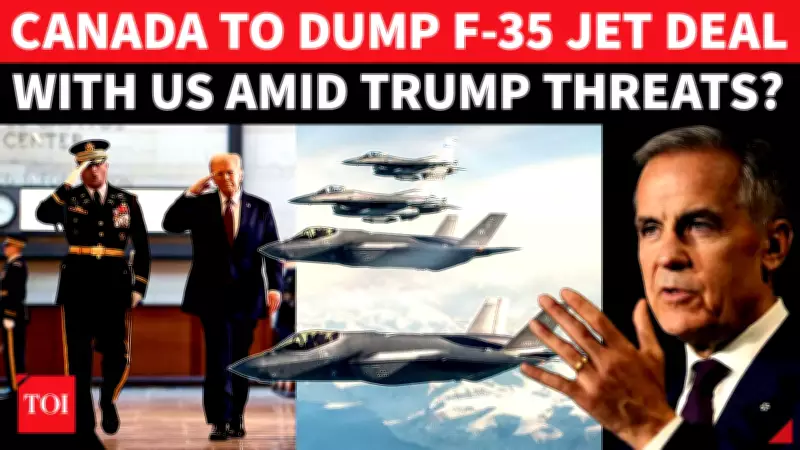
Canada Reconsiders F-35 Fighter Jet Purchase Amid Escalating US Trade Tensions
In a significant development that underscores growing strains in North American relations, Canada is actively reassessing its planned acquisition of U.S.-made F-35 fighter jets. This move comes as long-simmering trade disputes between Ottawa and Washington spill over into the critical realm of defense cooperation, threatening to reshape decades of military partnership.
Trade War Spills Into Defense Ties
The reassessment is driven by a confluence of factors that have intensified under the administration of President Donald Trump. Rising costs associated with the F-35 program, coupled with persistent delivery delays, have raised serious economic and operational concerns in Canadian defense circles. More broadly, the political friction stemming from Trump's aggressive trade policies and tariff threats has created an environment of uncertainty, prompting Ottawa to question its traditional reliance on American military systems.
Exploring Alternatives and Strategic Implications
Canadian officials are now exploring viable alternatives to the F-35, with Sweden's Gripen fighter jet emerging as a prominent contender. This exploration signals a potential strategic pivot with far-reaching consequences:

- Future of NORAD Cooperation: Any shift away from U.S. equipment raises fundamental questions about the future interoperability and cohesion of the North American Aerospace Defense Command (NORAD), a cornerstone of continental security since the Cold War.
- Long-Standing Military Reliance: Canada's potential departure from the F-35 deal challenges its long-standing dependence on American defense technology and procurement, a relationship that has defined its military posture for generations.
- Broader Alliance Dynamics: This reassessment reflects wider anxieties among U.S. allies regarding the reliability of partnerships under the current American political climate, where trade and security are increasingly intertwined.
The situation remains fluid, with Canadian defense planners weighing the technical merits of alternatives against the diplomatic and strategic costs of distancing from a key ally. This decision will not only affect Canada's air force capabilities but also serve as a bellwether for the health of the broader U.S.-Canada relationship in an era marked by transactional diplomacy and economic confrontation.






