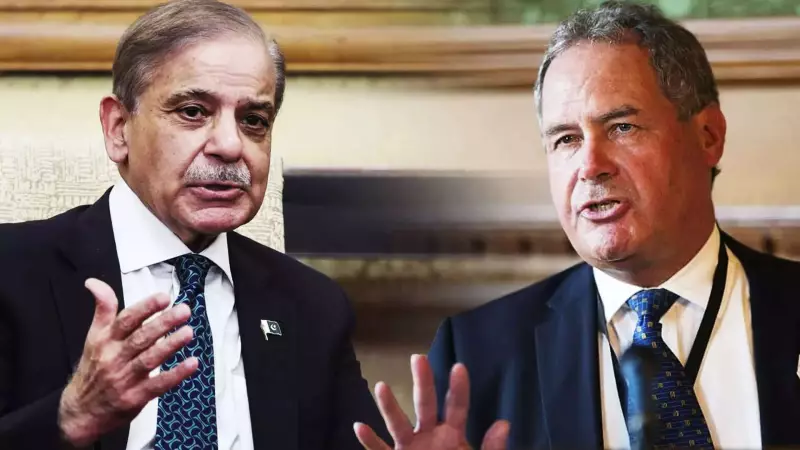
In a strong endorsement of India's position, British Member of Parliament Bob Blackman has called for the complete reunification of the entire former princely state of Jammu and Kashmir with India. The Conservative MP made these remarks during a Hi-Tea Programme held in Jaipur on January 5, 2026.
A Three-Decade-Long Advocacy
Blackman revealed that his support for India's claim over Jammu and Kashmir is not a recent development. He stated that his advocacy for the abrogation of Article 370 began as far back as 1992. This was a direct response to the tragic exodus of the Kashmiri Pandit community from the Valley. The MP emphasized that he has held this position for over three decades, long before the Indian government, led by Prime Minister Narendra Modi, took the historic step to revoke the article's special provisions in August 2019.
Condemning Terrorism and Illegal Occupation
The parliamentarian did not mince words when addressing the security situation in the region. "Not only have I condemned terrorism, but I also condemned the illegal occupation by Pakistan," Blackman asserted during his address. He consistently criticized Pakistan's control over parts of the erstwhile princely state, labeling it as an unlawful hold. His comments underscore a firm stance against cross-border terrorism and a clear recognition of Pakistan-administered territories as being under illegal occupation.

The Core Demand: Reunification Under India
Reiterating his long-held view, Bob Blackman clearly articulated the desired outcome. "The whole of the princely state of Jammu and Kashmir should be reunited under the crown of India," he declared. This statement reinforces the idea of India's sovereign claim over the entire territory as it existed at the time of accession in 1947. His use of the term "crown of India" is a symbolic nod to the historical accession made by Maharaja Hari Singh to the Dominion of India.
The MP's remarks in Jaipur highlight the sustained international support for India's viewpoint on the Kashmir issue from certain quarters within the United Kingdom. His three-decade-long narrative connects the plight of Kashmiri Pandits with the constitutional changes in 2019, presenting them as part of a continuous struggle for justice and integration.