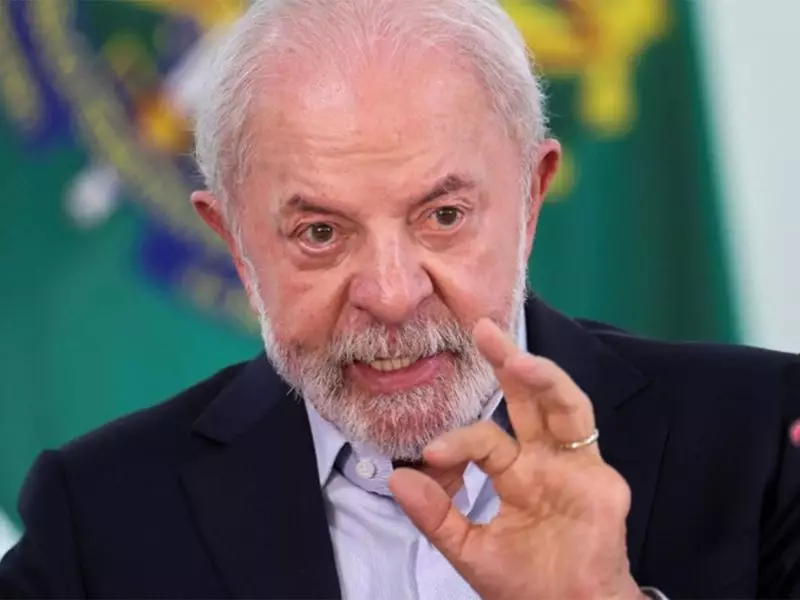
In a significant diplomatic escalation, the Brazilian government has issued a stern condemnation of recent United States military actions within Venezuelan territory. The South American nation labeled the reported capture of Venezuelan President Nicolas Maduro as crossing a dangerous and unacceptable line, firmly defending the principle of national sovereignty.
Brazil's Firm Stance Against Foreign Intervention
The Brazilian Ministry of Foreign Affairs released a powerful statement expressing its profound concern and outright rejection of the operations conducted by U.S. forces. The core of Brazil's objection hinges on a fundamental principle of international law: the respect for the sovereignty and territorial integrity of nations. Brazilian authorities emphasized that any military action on foreign soil, especially one targeting a sitting head of state, sets a perilous precedent for global order.
The statement did not mince words, directly addressing the incident involving President Maduro. It declared that the move to capture a democratically elected leader, regardless of political disputes, represents a severe violation of international norms. This position aligns with Brazil's longstanding foreign policy doctrine, which has historically advocated for non-intervention and peaceful resolution of conflicts within the Latin American region.

Details of the Controversial US Military Operation
While the Brazilian condemnation was clear, it referenced the broader context of U.S. airstrikes and ground operations within Venezuela. These actions, reportedly aimed at specific targets linked to the Maduro administration, have ignited a firestorm of controversy. The U.S. government has yet to provide a detailed public justification for the strikes, but sources suggest they were framed as counter-terrorism or national security measures.
The most explosive allegation, implicitly confirmed by Brazil's reaction, is the attempted or actual capture of President Nicolas Maduro. This event, if verified, would mark an unprecedented escalation in the years-long political and economic crisis gripping Venezuela. Brazil's statement serves as a crucial regional perspective, challenging the narrative and legality of such an extreme interventionist tactic.
Regional Repercussions and Global Implications
Brazil's forceful condemnation is expected to have major ripple effects across Latin America and beyond. It potentially signals a re-alignment or hardening of positions within the region regarding the Venezuelan crisis. Other nations that have been critical of Maduro's regime may now feel compelled to distance themselves from the U.S.'s military approach, prioritizing sovereignty over political alignment.
The incident threatens to further destabilize an already volatile region. It raises urgent questions about the limits of foreign power involvement in internal conflicts and the mechanisms for legitimate political change. Brazil's stand highlights a growing divide in the international community on how to address regimes considered authoritarian, pitting the doctrine of intervention against the bedrock principle of non-interference.
Analysts suggest this move by Brazil could complicate its bilateral relations with the United States, even as both countries have recently sought warmer ties. The statement underscores that certain red lines, particularly involving military force against a neighboring state, remain non-negotiable for Brasilia. The global community now watches closely to see if other nations will echo Brazil's condemnation or support the U.S. actions, setting the stage for a major diplomatic showdown in international forums like the United Nations.