
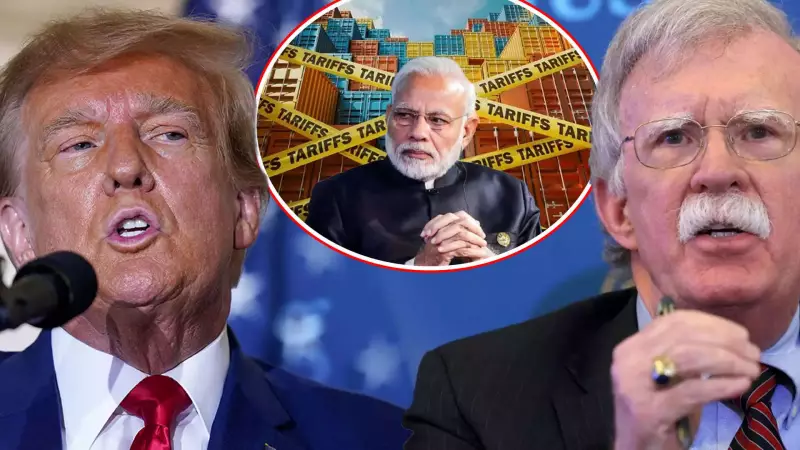
In a sharp critique of former President Donald Trump's trade policy, former US National Security Advisor John Bolton has labeled the approach towards India as strategically misguided. Bolton argued that such tactics damage crucial bilateral ties at a time when cooperation is vital.
Bolton's Critique: A Call for Strategic Alliance
John Bolton, who served under the Trump administration, publicly stated that the United States should prioritize building strong alliances with key democracies like India, Japan, South Korea, and Taiwan. He emphasized that the collective focus should be on countering global threats rather than getting overly fixated on tariff disputes and individual trade issues, such as India's purchases of Russian oil.
Bolton specifically referenced Trump's previous threat to increase tariffs on India if it did not significantly reduce its imports of Russian crude. While Trump has described Prime Minister Narendra Modi as "a good guy," he also noted that Modi was aware of his dissatisfaction regarding the oil trade.
The Political Backdrop and India's Position
Adding context to the situation, Senator Lindsey Graham pointed out that India is already in the process of cutting down its purchases of Russian crude oil. Furthermore, India's envoy in Washington has formally approached the Trump camp, seeking relief from the proposed tariff hikes.
This diplomatic outreach highlights the economic pressures and the importance India places on stable trade relations with the US. The threat of higher tariffs poses a significant challenge to the strategic and economic partnership both nations have been cultivating.
A Proposed Path Forward: Direct Dialogue
To resolve the escalating tension, John Bolton proposed a high-level solution. He suggested that direct talks between former President Donald Trump and Prime Minister Narendra Modi could be the most effective way to settle the tariff dispute.
Bolton's intervention underscores a growing concern among foreign policy experts that transactional approaches on trade could undermine broader geopolitical objectives. His comments signal a belief that the US-India relationship is too important to be derailed by single-issue disagreements, especially when both countries share common strategic interests in the Indo-Pacific region.
The call for dialogue reflects an understanding that complex international relationships require nuanced handling, where economic tools like tariffs must be balanced against long-term strategic goals.