Bangladesh's 2024 Elections Mark a Historic Shift in Governance
The 13th general elections in Bangladesh, held in 2024, represented a profound departure from the nation's political norms. Conducted in the aftermath of a significant uprising that dismantled the longstanding political order, these polls were notably absent of traditional electoral giants such as Sheikh Hasina and Khaleda Zia, signaling a break from the past.
Dual Voting System and the July Charter Referendum
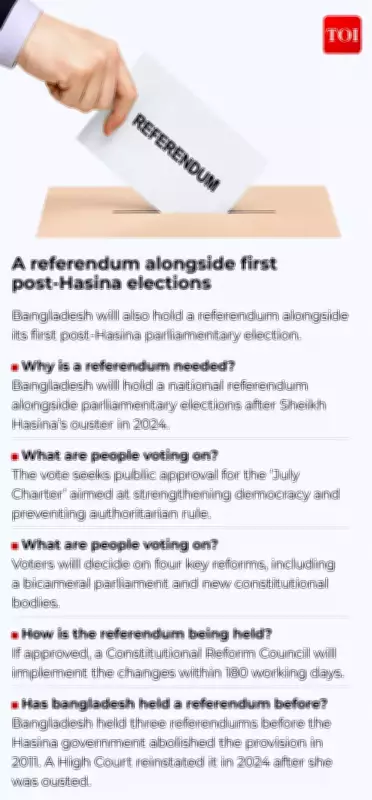
A unique aspect of these elections was the implementation of a dual voting mechanism. Voters were required to cast two ballots: one to elect their next Prime Minister and another to express their consent for the "July Charter." This charter is a comprehensive initiative designed to overhaul Bangladesh's governance structure, aiming to prevent future authoritarianism and establish what many refer to as the "Second Republic."
The referendum was executed across all 64 districts under stringent security measures and with international observation. Early counts indicated a commanding lead for the "Yes" vote, with over 65.3% support reported from both urban and rural constituencies. Most major political parties, despite minor disagreements on specifics, actively campaigned in favor of the charter.

Key Provisions of the July Charter
The July National Charter (Constitutional Amendment) Implementation Order, 2025, is a 28-page agreement signed by 25 political parties and the interim government led by Muhammad Yunus. Its key reforms include:
- Power Limits for Prime Minister: A term limit of 10 years or two terms lifetime, a ban on dual roles as party head and government head, and requiring cabinet and opposition leader consent for emergency declarations.
- Parliamentary Reforms: Establishment of a bicameral parliament with a new Upper House, abolition of Article 70 to allow independent voting by MPs, mandatory opposition Deputy Speaker, and increased women's representation to 100 seats.
- Electoral System: Restoration of a Non-Partisan Caretaker Government for elections, mandatory paper ballots over EVMs, and restructuring of the Election Commission with independent experts.
- Identity and State Principles: Changing nationality from "Bengali" to "Bangladeshi" to include indigenous groups, recognizing all mother tongues officially, and replacing state principles with Equality, Human Dignity, Social Justice, and Religious Harmony.
- Judiciary and Legal Rights: Creating independent judicial bodies, adding rights to internet service and data protection, and requiring victim family consent for presidential pardons.
- Administrative Reforms: Granting full independence to anti-corruption and human rights commissions, reforming police into a citizen service, and providing indemnity for 2024 uprising participants.
Referendum Outcome and Implications
With the "Yes" vote surpassing the simple majority threshold of 50%, the referendum has been accepted. Consequently, the new Parliament will function as a Constitutional Reform Council, tasked with implementing these reforms within 180 working days. This marks Bangladesh's first referendum since 1991 and introduces widespread mail-in and overseas voting, enhancing democratic participation.
The July Charter effectively ends the "winner-takes-all" system by institutionalizing greater opposition power, such as mandating the Deputy Speaker from the opposition. While 25 parties supported it, some groups like the student-led NCP and parts of the BNP expressed concerns about the depth and legal basis of certain reforms, highlighting ongoing debates in Bangladesh's political landscape.