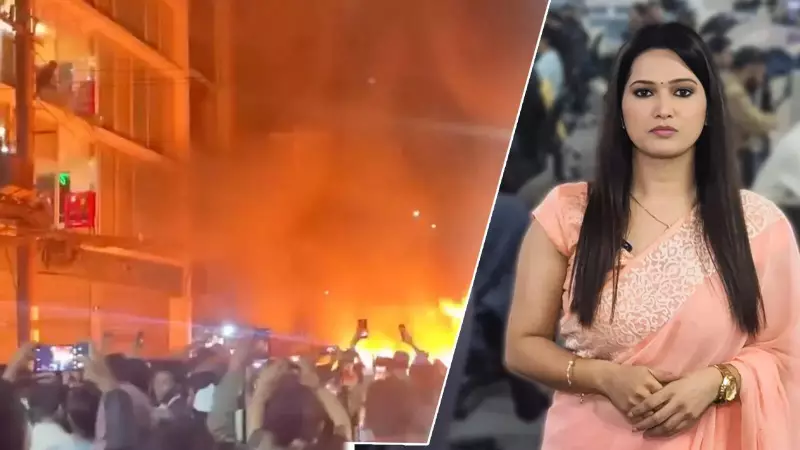
Fresh waves of political violence in neighbouring Bangladesh have triggered significant concern within India's strategic establishment. The death of a key political figure, Sharif Osman Hadi, has ignited widespread street protests and arson attacks, plunging the nation into instability at a highly sensitive juncture just ahead of crucial elections.
Escalating Crisis and Direct Impact on India
The situation has moved beyond Bangladesh's borders, creating direct repercussions for India. A dangerous online campaign, rife with rumours and accusations targeting New Delhi, has gained momentum. This has led to tangible threats against Indian diplomatic missions operating within Bangladesh. In a clear sign of the escalating tension, India has been forced to suspend its visa services in the country, a move highlighting the severity of the security environment.
For India, the stakes in Bangladesh are extraordinarily high. The nation is not just a neighbour but a central pillar for India's eastern security architecture, economic connectivity projects, and maintaining a stable regional balance. The turmoil threatens to undermine years of diplomatic and economic investment.

A Parliamentary Warning and Broader Threats
The gravity of the moment has been officially recognized in New Delhi. A key Indian parliamentary panel has recently assessed the unfolding chaos, describing it as India's most significant strategic challenge emanating from Bangladesh in decades. This stark warning underscores the depth of official worry.
Analysts point to a confluence of factors that make this crisis particularly acute for Indian policymakers. The immediate political churn in Dhaka is compounded by concerns about rising extremism and, most alarmingly, a visible anti-India mobilisation within segments of the Bangladeshi populace. This toxic mix creates a scenario that India simply cannot afford to ignore, as it threatens core national interests.
Why Stability in Dhaka Matters to Delhi
The reasons for India's acute concern are multifaceted and deeply rooted in geography and strategy.
- Security: A stable Bangladesh is vital for securing India's northeastern states and curbing cross-border insurgent activities.
- Connectivity: Bangladesh is a linchpin for India's 'Act East' policy and crucial sub-regional projects like BBIN (Bangladesh, Bhutan, India, Nepal) initiative.
- Countering China: Maintaining a strong partnership with Dhaka is key to balancing China's growing influence in the Bay of Bengal region.
- Economic Ties: Bangladesh is a major trade partner, and instability disrupts supply chains and bilateral commerce.
The current unrest, fueled by the tragic death of Sharif Osman Hadi and playing out in the volatile pre-election atmosphere, represents a perfect storm. It tests the resilience of bilateral ties and pushes India into a delicate diplomatic position where it must navigate internal Bangladeshi politics while safeguarding its own strategic equities. The coming weeks will be critical in determining whether the situation spirals further or finds a path toward resolution.