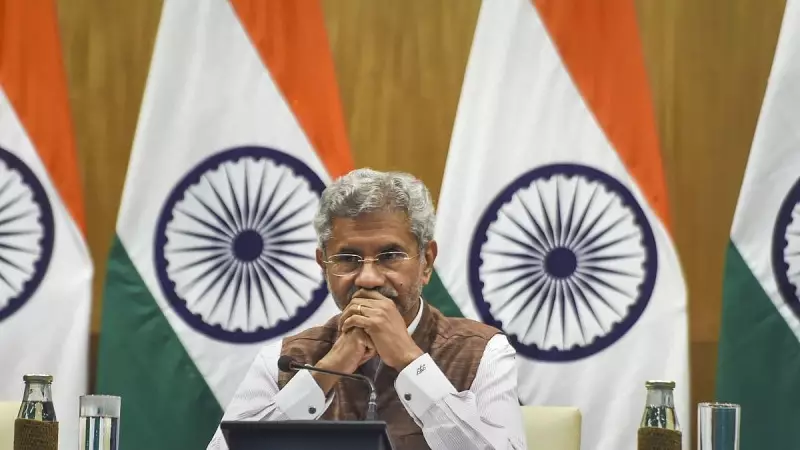
Bangladesh has formally dismissed comments made by India's Ministry of External Affairs (MEA) regarding a recent demonstration in New Delhi, labeling them as "unwarranted." The diplomatic friction stems from a protest held outside the Bangladesh Deputy High Commission in the Indian capital.
The Core of the Dispute: A Protest in New Delhi
The incident occurred on a Friday when a group of demonstrators gathered outside the Bangladeshi mission in New Delhi's Chanakyapuri area. The protestors were reportedly expressing their views on the political situation within Bangladesh. In response to this event, the official spokesperson for India's Ministry of External Affairs, Randhir Jaiswal, addressed the media. He stated that Indian authorities had provided necessary security to the diplomatic mission to prevent any potential escalation. Jaiswal emphasized India's long-standing policy of not interfering in the internal matters of other nations.
However, the Bangladeshi side viewed India's public commentary on the matter as an overstep. The Ministry of Foreign Affairs in Dhaka issued a swift and firm rebuttal. In an official statement released on Saturday, the ministry expressed its surprise and disappointment at the MEA's remarks. The Bangladeshi government made it clear that it considers any foreign commentary on its domestic affairs, even if framed within the context of a protest on foreign soil, as an infringement on its sovereignty.

Dhaka's Firm Stance on Sovereignty
The Bangladeshi foreign ministry's statement was unequivocal. It asserted that the internal affairs of Bangladesh are a matter solely for its people and government to decide. The ministry further clarified that the protest in New Delhi was organized by individuals aligned with a particular political party in Bangladesh, implying it was an external manifestation of an internal political dynamic. By commenting on it, Dhaka felt New Delhi was indirectly wading into its domestic political landscape.
This exchange highlights the sensitive nature of diplomacy between neighboring nations, even those with generally strong ties. While India's statement aimed to showcase its commitment to protecting diplomatic premises, Bangladesh interpreted it as commentary on its internal politics. The episode underscores the delicate balance nations must maintain between commenting on events within their territory and respecting the sovereignty of other states.
Implications for Bilateral Relations
While this incident represents a point of public disagreement, both countries have a vested interest in maintaining stable and cooperative relations. The relationship between India and Bangladesh is multifaceted, encompassing trade, security, water resources, and connectivity. Sporadic diplomatic spats, while notable, are often managed within the broader framework of engagement.
Nevertheless, Bangladesh's strong rejection serves as a reminder of its firm stance on principles of non-interference. It signals to all international partners that Dhaka is keenly sensitive to any perceived external commentary on its political processes. For India, which often positions itself as a regional leader and a proponent of "neighbourhood first" policy, managing such perceptions is a continuous diplomatic task. The coming days may see behind-the-scenes diplomatic channels being used to address any lingering concerns and ensure the incident does not cast a shadow over broader cooperative endeavours.