

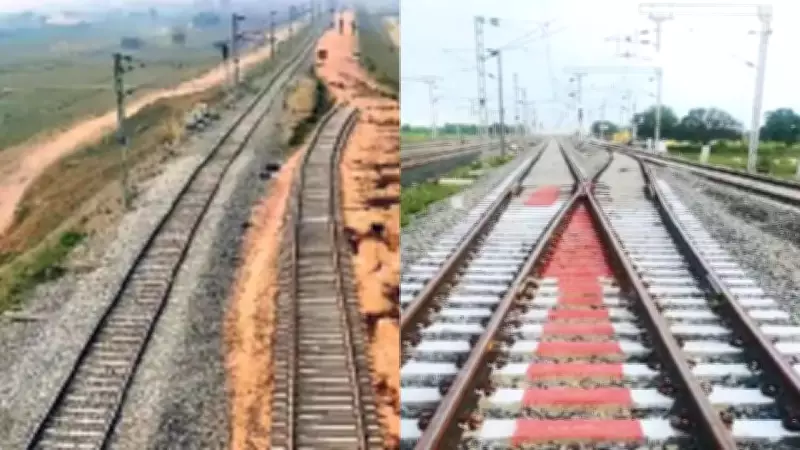
Railway Ministry Initiates Detailed Study for Ballia-Dehri Rail Corridor
The Ballia–Dumraon–Dehri Rail Line Construction Struggle Committee has intensified its efforts to push forward the long-pending Ballia–Dumraon–Dehri-on-Sone railway project. On Wednesday, the committee submitted a fresh memorandum to former Ballia BJP MP Virendra Singh Mast, following encouraging signals from the railway ministry regarding a comprehensive examination of the proposed rail line.
Political Advocacy and Ministry Response
Earlier, the committee had channeled its demand through Ballia Samajwadi Party MP Sanatan Pandey. In a significant development, railway minister Ashwini Vaishnaw responded to Pandey's representation by confirming that instructions have been issued to the concerned directorate to conduct a detailed study of the new railway line between Ballia and Dehri-on-Sone via Dumraon and Bikramganj.
This move represents a crucial step forward for a project that has been languishing for over two decades, according to local residents and committee members.

Proposed Route and Regional Connectivity
The proposed corridor aims to create a vital transportation link between Ballia in Uttar Pradesh and Dehri-on-Sone in Bihar. The route would pass through several important locations including:
- Simri and Asha Padari
- Bhojpur and Dumraon
- Nawanagar in Buxar district
- Bikramganj, Karakat and Nasriganj in Rohtas district
Committee secretary Umesh Kumar Gupta emphasized the project's significance, stating: "The area suffers from poor rail and road connectivity. This rail line will link large parts of eastern UP and Bihar and improve access to Jharkhand, addressing a long-standing infrastructure gap in this neglected region."
Transformative Impact on Travel
The current travel scenario between Ballia and Dehri highlights the urgent need for this rail corridor. Passengers currently must cover approximately 360 kilometers via Buxar and Patna, requiring multiple train changes and enduring journeys of 10 to 12 hours.
The proposed direct rail line would dramatically reduce this distance to about 98 kilometers, cutting travel time to just two to three hours. This represents a potential reduction of 75-80% in travel duration, offering substantial benefits for daily commuters, pilgrims, and business travelers.
Rajesh Kumar, a resident of Dumraon, expressed the community's sentiment: "This will save time and money for daily commuters and pilgrims. People have been demanding this line for over two decades, and we're hopeful that this time we'll see concrete progress."
Political and Economic Significance
According to the committee's memorandum, the project would benefit 11 Lok Sabha constituencies, including:
- Ballia
- Ghazipur
- Mau
- Chhapra
- Siwan
- Ara
- Buxar
- Karakat
The rail line would also enhance connectivity to major religious and tourist centers such as Bodh Gaya, Rajgir, Pawapuri, Kushinagar, Parasnath, Mundeshwari Dham, and Tara Chandi, potentially boosting religious tourism in the region.
Industrial and Economic Benefits
The committee highlighted several economic advantages of the proposed corridor:
- Improved access to the Dalmianagar railway workshop
- Better connectivity to the Banjari cement factory
- Enhanced access to the Chausa thermal power plant
- Support for proposed Special Economic Zones in Nawanagar and Dehri
The corridor would provide the Railways with a shorter freight route, potentially generating additional revenue while reducing transportation costs for regional industries.
Political Support and Future Prospects
In a telephonic conversation, former MP Virendra Singh Mast acknowledged that he was previously not fully aware of the proposal's details. He stated: "This is a historic and socially important demand. It can accelerate regional development significantly." He further committed to taking up the matter with railway minister Ashwini Vaishnaw to ensure continued momentum.

Local residents and committee members believe the rail line would create numerous employment opportunities, boost trade and tourism, and provide a strong developmental push to Purvanchal and adjoining regions of Bihar and Jharkhand. The project represents more than just transportation infrastructure—it symbolizes hope for comprehensive regional development in an area that has historically faced connectivity challenges.
The railway ministry's decision to conduct a detailed study marks a positive development, but stakeholders emphasize the need for timely implementation to realize the project's full potential for transforming regional connectivity and economic prospects.





