Awami League Leaders in Kolkata Express Hope for Democratic Restoration in Bangladesh
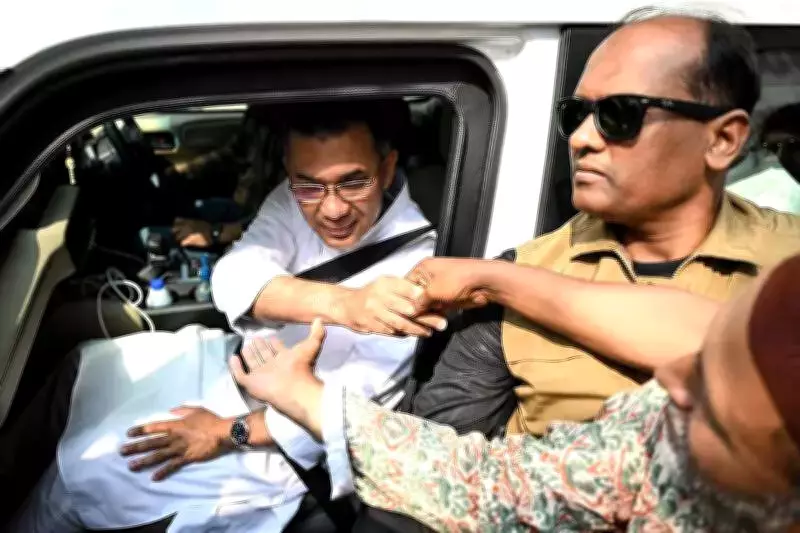
As Tarique Rahman was sworn in as the prime minister of Bangladesh, marking the end of a two-decade hiatus from power for the Bangladesh Nationalist Party (BNP), leaders of the Awami League, currently in exile in Kolkata, voiced optimism that the newly elected government would take steps to restore democracy in the country. Specifically, they called for the lifting of the ban on their party, which has been in place under the interim government.
Sheikh Hasina's Audio Message and Party Leadership Concerns
Former Bangladesh Prime Minister Sheikh Hasina sent an audio message to Awami League leaders in exile on Tuesday evening, alleging that the recent election was engineered and marred by widespread fraudulent voting. In her message, she criticized the polling process, claiming it lacked transparency and fairness. Meanwhile, her son, Sajeeb Wazed Joy, who had previously hinted at reaching out to the BNP, remained silent on the matter on Tuesday. In a video message posted on the Awami League's Facebook page, Joy stated, "The party workers will have to decide who will lead politics in Bangladesh. I cannot tell them who is going to be their next leader." This highlights internal uncertainties within the party regarding future leadership.
Historical Context and Expectations from the New Government
Alauddin Ahmed Chowdhury, a former MP of Feni-1, expressed cautious expectations for the current government, referencing the BNP's governance between 2001 and 2006. He emphasized, "However, we expect them to honour the democratic process and lift the ban on Awami League. The interim government imposed the ban and barred the largest party in Bangladesh from participating in the elections. They need to restore a democratic environment in the country and regain the trust of the people." Chowdhury's remarks underscore the critical need for political inclusivity and trust-building measures.

Legal Challenges and Economic Concerns
Awami League leaders pointed to thousands of "fake cases" registered against party members, with a Dhaka court recently sentencing Sheikh Hasina to 10 years in prison for corruption and earlier to death in absentia for crimes against humanity. Chowdhury argued, "These cases lodged by the interim government are baseless and need to be quashed immediately. It was a ploy by the interim government to silence a party that has the support of more than half the population of Bangladesh." Additionally, Rokeya Prachi, former cultural secretary of the party's women's wing, called for accountability, stating that the new government must punish those who committed crimes against minorities after August 5, 2024, and destroyed historical monuments, citing examples from countries like Nepal.
Prachi also highlighted the dire economic situation, noting, "The current government must prioritize the development of the country's economy. People have lost jobs. Banks and stock markets are facing a crisis. This needs to be addressed immediately." Her comments reflect broader concerns about economic stability and recovery under the new administration.
Conclusion: A Call for Democratic and Economic Reforms
In summary, Awami League leaders in Kolkata are urging the newly formed Bangladesh government under Tarique Rahman to:
- Lift the ban on the Awami League to foster political inclusivity.
- Address legal injustices by quashing baseless cases against party members.
- Restore democratic processes to rebuild public trust.
- Focus on economic development to tackle job losses and financial crises.
As Bangladesh navigates this political transition, the international community watches closely, hoping for a peaceful and democratic resolution to the country's challenges.