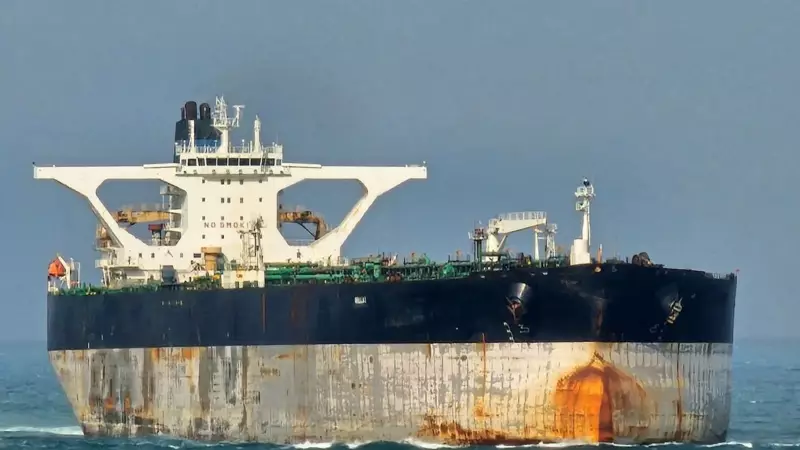
In a significant maritime enforcement action linked to international sanctions, United States authorities have seized a Russian-flagged oil tanker that included three Indian nationals among its crew. The incident, which underscores the widening net of sanctions enforcement, involved the vessel suspected of violating price caps imposed on Russian oil following the Ukraine conflict.
The Seizure and the Suspected Violation
The vessel in question is the Liberia-flagged, Russian-owned oil tanker 'NS Century'. According to the US Department of the Treasury's Office of Foreign Assets Control (OFAC), the ship was implicated in transporting Russian crude oil priced above the coalition-agreed cap. This price cap mechanism, designed by a coalition including the G7, the European Union, and Australia, aims to restrict Russia's revenue from oil exports while keeping the commodity flowing to global markets.
The actual seizure was carried out by authorities at the Port of Nakhodka in Russia's Far East. Reports confirm that the tanker's cargo of crude oil was sold for more than the $60-per-barrel price ceiling. The US Treasury has since imposed sanctions on several entities, including the ship's owner, for their role in the violation.

Indian Nationals Among the Crew
A critical detail of this international incident is the presence of Indian seafarers. Official sources have confirmed that three Indian crew members were aboard the NS Century at the time of its seizure. The Indian government, through its diplomatic channels, is actively engaged in the matter.
The Ministry of External Affairs (MEA) has stated that it is in touch with the relevant authorities regarding the welfare and repatriation of the Indian nationals. "Our Embassy in Moscow is in contact with the Russian authorities for consular access and the early release of our nationals," an MEA spokesperson noted, highlighting the ongoing diplomatic efforts to resolve the situation for the affected seafarers.
Broader Implications and the Price Cap Regime
This seizure represents one of the most direct enforcement actions taken by the US under the price cap regime established in late 2022. The move signals a more aggressive stance in policing violations and serves as a stark warning to shipping companies, insurers, and other service providers involved in the transport of Russian oil.
For India, which has continued to import Russian oil at discounted rates post the Ukraine war, the incident brings to the fore the complex navigation required between energy security, economic interests, and the adherence to international sanctions frameworks. While India is not a direct participant in the price cap coalition, its nationals and shipping interests can become inadvertently entangled in such enforcement actions.
The situation also puts a spotlight on the vulnerability of Indian seafarers who form a significant part of the global maritime workforce. Their employment on vessels involved in contentious trade routes or under sanctions pressure can lead to complex humanitarian and diplomatic challenges, as seen in this case.
As investigations continue, the focus remains on the legal proceedings against the vessel's operators and the safe return of all crew members. The incident is likely to prompt shipping companies and crewing agencies to exercise heightened due diligence when accepting contracts related to commodities and entities under international sanctions scrutiny.