Delhi's Yamuna Ghats: A Winter Sanctuary for Birds and Photographers
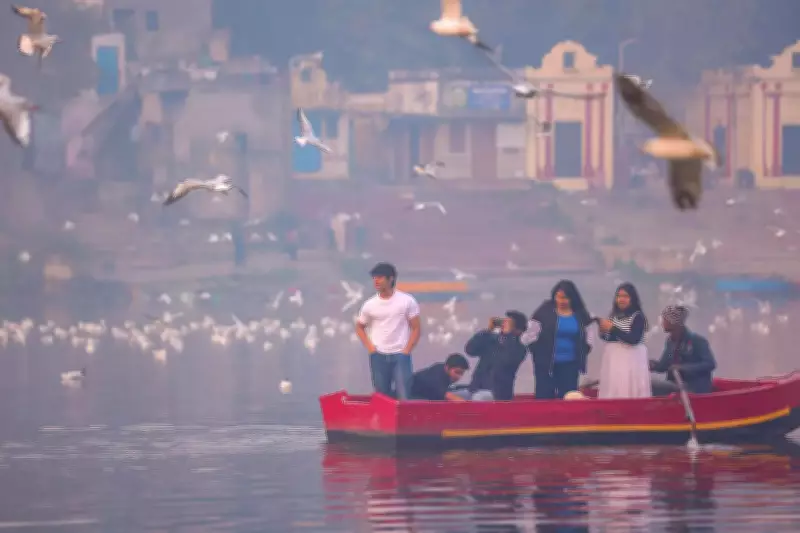
As dawn breaks over Delhi, the Yamuna ghats undergo a remarkable transformation. The shifting skies and sweeping flocks of migratory birds create a rare moment of tranquility before the city erupts into its characteristic hustle. This seasonal spectacle offers residents and visitors alike a unique opportunity to engage with nature through birding, boating, and basking in the golden morning light.
A Birder's Paradise in Urban Delhi
Countless migratory birds descend upon the Yamuna riverbanks each winter, transforming these urban ghats into prime territory for birdwatchers and photography enthusiasts. Dr. Rajesh Kalra, an experienced birder, explains the phenomenon: "From November through March, thousands of black-headed gulls and brown-headed gulls migrate from the harsh climates of northern Asia to these specific waters along the Yamuna."
What makes the Yamuna ghats particularly special, according to Dr. Kalra, is their accessibility. "Unlike more remote wetlands, the ghats allow for close-range observation of various species including gulls, terns, and multiple wagtail varieties such as the citrine and white wagtails. The local practice of feeding puffed rice creates high-density clusters of birds, offering exceptional photographic and counting opportunities."

Despite visible pollution concerns, the consistent presence of these migratory birds has established the Yamuna ghats as a significant site for urban birding activities and bird census operations throughout the winter months.
The Photographic Canvas Comes Alive
The Yamuna ghats have evolved beyond their traditional functions to become premier locations for photography enthusiasts. Virendra Shekhawat, founder of the Delhi Photography Club, recently conducted a photowalk at Yamuna Ghat No. 25 and notes: "Yamuna ghat offers the perfect blend of human and nature subjects. The combination of cultural authenticity and natural beauty creates an ideal setting for both amateur and professional photographers."
Lifestyle photographer Surya Chaturvedi elaborates on the ghat's photographic appeal: "This season, the ghat becomes a vibrant canvas for photography and storytelling. The misty river backdrop with birds in motion creates a cinematic quality that's particularly ideal for fashion and pre-wedding shoots. The soft natural morning light enhances skin tones and brings out fabric details beautifully, while the muted pastel hues ensure outfits and emotions stand out without visual distraction."
Chaturvedi emphasizes that the natural depth and movement along the ghats add elegance and editorial richness to every frame, creating visuals with timeless appeal.
Practical Experiences and Technical Insights
Visitor Ishika Rastogi shares her personal experience: "I visited the Yamuna Ghat after seeing reels on Instagram and planned an early morning visit to experience boating with the rising sun in the background. It was a genuinely pleasant and peaceful experience that offered a different perspective on Delhi."
For those interested in boating, service providers typically charge approximately Rs 1000 for private one-hour tours, while group rates range between Rs 50 to Rs 100 per person.
For photography enthusiasts seeking to capture the avian activity, Virendra Shekhawat offers technical recommendations:
- Set your DSLR camera to aperture priority mode with shutter speed around 800 to 1000
- Use the widest possible aperture setting available on your lens
- Set ISO between 800 to 1000 for optimal bird activity capture
- Utilize AF-C (Autofocus Continuous) focus mode combined with continuous shooting
Beyond the Central Ghats: Extended Birding Opportunities
While the central Yamuna ghats attract significant attention, several other areas along the river provide important birding habitats. Key locations include Asita East, Chilla Khadar, Wazirabad, and Sungarpur, each offering unique opportunities to observe different species and behaviors within Delhi's urban landscape.

The seasonal transformation of the Yamuna ghats represents a remarkable intersection of urban life and natural migration patterns, creating spaces where nature observation, cultural practice, and artistic expression converge against the backdrop of one of India's most dynamic metropolitan areas.