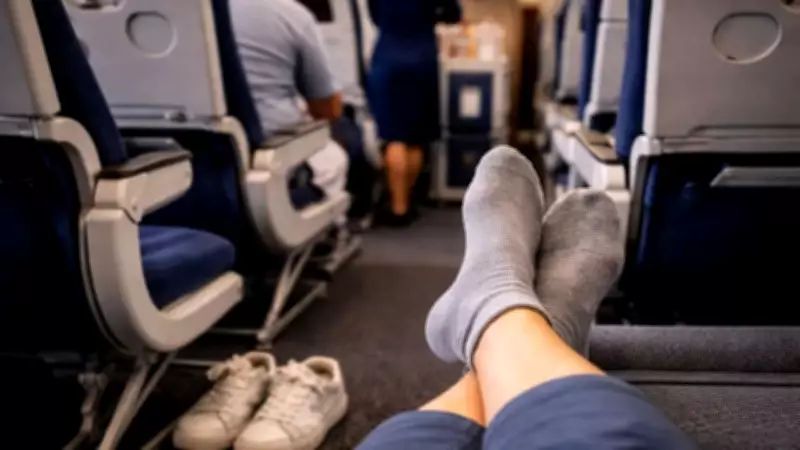
The Hidden Dangers of Going Barefoot on Airplanes
Air travel has become a commonplace activity for millions, yet the clothing choices we make while flying can have far-reaching implications beyond mere comfort. Flight attendants, drawing from extensive experience, consistently advise passengers on optimal attire for flights. One critical recommendation is to avoid going barefoot, as this seemingly comfortable habit harbors numerous hidden risks in the shared, often inadequately cleaned environment of an aircraft cabin.
Hygiene Risks You Might Overlook
The cabin crew emphasizes that airplane carpets and floors are not sanitized as frequently as many assume. Spills, dust, and microbial contaminants can linger for extended periods. Research, including studies like The Airplane Cabin Microbiome, confirms that bacteria from human skin and the environment are pervasive in aircraft cabins, settling on various surfaces. The floor, particularly around seating and walking areas, may accumulate pathogens from previous passengers who walked barefoot.
Wearing socks acts as a protective barrier, preventing direct contact with these unclean surfaces. Without this layer, feet can easily pick up germs, which may then transfer to seats or other body parts, posing health hazards.

Comfort and Circulation During Long-Haul Flights
Beyond hygiene, socks play a vital role in enhancing comfort and promoting blood circulation, especially on lengthy journeys. Prolonged sitting can impede blood flow in the legs and feet, increasing the risk of conditions like deep vein thrombosis (DVT). Specialized travel or compression socks are particularly beneficial, as they apply gentle pressure to improve circulation and reduce swelling.
Studies have demonstrated that wearing compression socks during flights lasting several hours can significantly lower the likelihood of circulatory issues. Even regular socks offer advantages by keeping feet warm in the typically cool cabin environment.
Safety Concerns Often Ignored by Passengers
Socks also contribute to safety onboard. In low-light conditions, such as during night flights, bare feet are difficult to see, raising the risk of collisions with service carts or other passengers in the aisle. In emergency situations, socks provide a layer of protection when moving quickly through the cabin, whereas bare feet could be vulnerable to injuries.
Why Airlines Include Socks in Travel Kits
Many airlines provide socks in amenity kits for long-haul flights, not merely as a luxury but for practical reasons. These socks are designed to ensure passenger comfort and maintain hygiene standards, underscoring their importance for a pleasant and safe travel experience.
Should You Opt for Special Flight Socks?
While basic socks suffice for hygiene and comfort, travelers with specific needs might consider compression socks. These are especially useful for long flights or individuals with circulation problems, offering enhanced benefits. However, any socks are better than none, as flight attendants advocate this simple measure to mitigate risks and improve overall travel well-being.