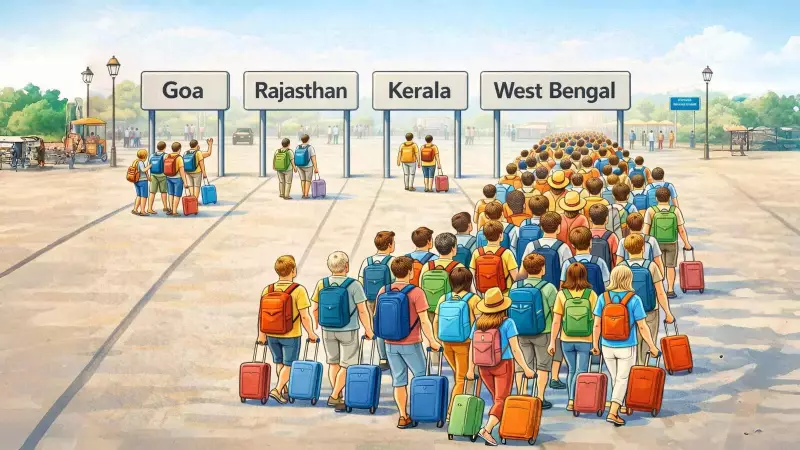
When listing India's top destinations for international travelers, the mind typically conjures images of Rajasthan's majestic forts, Kerala's serene backwaters, Goa's sun-kissed beaches, or Uttar Pradesh's iconic Taj Mahal. However, in a significant shift for the country's tourism landscape, West Bengal emerged as a surprising frontrunner in 2024, outshining these famed locations in drawing visitors from abroad.
The Numbers Tell a New Story
Official data from the Union tourism ministry, published in the India Tourism Data Compendium 2025, reveals a remarkable trend. During the calendar year 2024, West Bengal recorded approximately 3.1 million foreign tourist visits. This impressive figure placed it ahead of every other major tourism-centric state except one. The only state to receive more foreign footfall was Maharashtra, which welcomed around 3.7 million international visitors.
It is crucial to understand that these statistics represent state-wise foreign tourist visits. This methodology means that a single traveler touring multiple states is counted separately in each, providing a measure of overall foot traffic rather than unique individuals.

Redrawing the Tourism Map
This development marks a pivotal moment, challenging long-held perceptions about India's primary foreign tourist magnets. For decades, states like Rajasthan, Kerala, and Goa have dominated the narrative and marketing efforts aimed at international audiences. West Bengal's ascent to the number two spot signifies a diversification of interest among foreign travelers exploring India.
The state's capital, Kolkata, with its rich colonial heritage, vibrant culture, and renowned cuisine, acts as a major gateway. Furthermore, destinations like the hill stations of Darjeeling and Kalimpong, the Sundarbans mangrove forests, and the terracotta temples of Bishnupur offer a diverse portfolio that appeals to a wide range of tourists, from heritage enthusiasts to nature lovers.
Implications and the Road Ahead
West Bengal's performance underscores the growing appeal of India's eastern corridor. It highlights successful tourism promotion and infrastructure development that is capturing the attention of the global travel community. This shift could encourage more balanced regional development in tourism infrastructure and prompt other states to innovate their offerings.
For the Indian tourism sector as a whole, this data is encouraging. It demonstrates that the country's appeal is not limited to a handful of iconic sites but is broadening, with travelers willing to explore deeper and wider. The challenge and opportunity now lie in sustaining this growth, enhancing connectivity, and ensuring world-class experiences across these emerging and established destinations to solidify India's position on the global travel map.