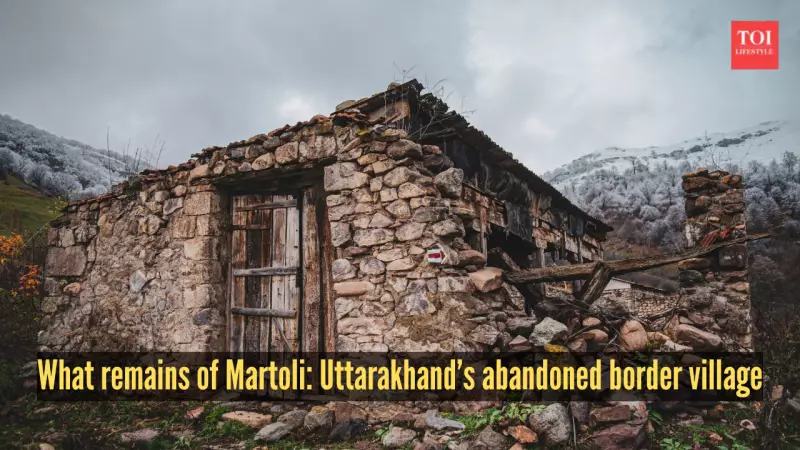
High in the remote folds of Uttarakhand, a state renowned for its majestic beauty, lies a village that time forgot. Martoli, nestled deep inside the Johar Valley, stands today in near silence. Its roofless stone houses, crumbling walls, and empty lanes are poignant monuments to a vibrant Himalayan way of life that abruptly ended decades ago.
The Thriving Cross-Border Heart of the Himalayas
Long before modern borders were firmly drawn, Martoli was not a remote outpost but a vital commercial hub. For generations, its people, part of the larger Bhotia community, built their lives around trans-Himalayan trade. The village thrived as a crucial node on ancient routes connecting India and Tibet.
The rhythm of life was dictated by the seasons. Families would spend winters in lower altitudes, gathering supplies. When summer arrived, they returned to Martoli, reopened their homes, tended to their land, and prepared for arduous trading journeys. Caravans laden with sugar, lentils, spices, and cloth would traverse high mountain passes like the Unta Dhura to exchange goods for salt and wool from Tibetan communities.

The Abrupt End in 1962
This centuries-old rhythm came to a devastating halt in 1962. The war between India and China led to the sealing of the border, severing the lifeblood of Martoli's economy virtually overnight. The high-altitude communities of the Johar Valley lost their economic sustenance and purpose.
With livelihoods gone, the harsh winters, isolation, and scarce resources became unbearable. A steady exodus began. At its peak in the early 1960s, Martoli was home to around 500 people. The entire Johar Valley, with its largest village holding nearly 1,500 residents, emptied out. Families left for towns in the plains, and most never returned. Today, only three or four people come back to Martoli each summer.
A Fragile Existence and Tentative Returns
Martoli is now suspended in a fragile state—neither fully alive nor completely forgotten. However, whispers of return are heard in the region. In nearby villages like Laspa, Ghanghar, and Rilkot, a slow, tentative revival is visible. A recently built unpaved road now allows vehicles to come within a few kilometres, making seasonal returns easier for some families.
Change has even reached isolated Martoli in a small way. Amidst the scattered ruins, a new guesthouse has emerged, catering to the occasional trekker on the famous route to the Nanda Devi base camp. This offers a glimmer of a new, tourism-based economy, though it remains minimal.
The village continues to exist through memory, seasonal labour, and the determination of a few individuals who refuse to let it vanish completely. The ruins of Martoli are more than just signs of abandonment; they are a silent, powerful record of a unique mountain culture shaped by trade, migration, and a border that changed everything.